Oct 22,2026
In the early days of early spring March, a two- and- a- half- hour flight carried us from the North China Plain into the spring warmth of the Yunnan- Guizhou Plateau. Over the next eleven days, we travelled through Kunming, Honghe, Yuanyang, Jianshui, Zhaotong, Chengdu, Guanghan, Huayin and Luoyang, covering more than 3,000 kilometres. What we saw and experienced along the way deserves to be compiled into a travel journal.
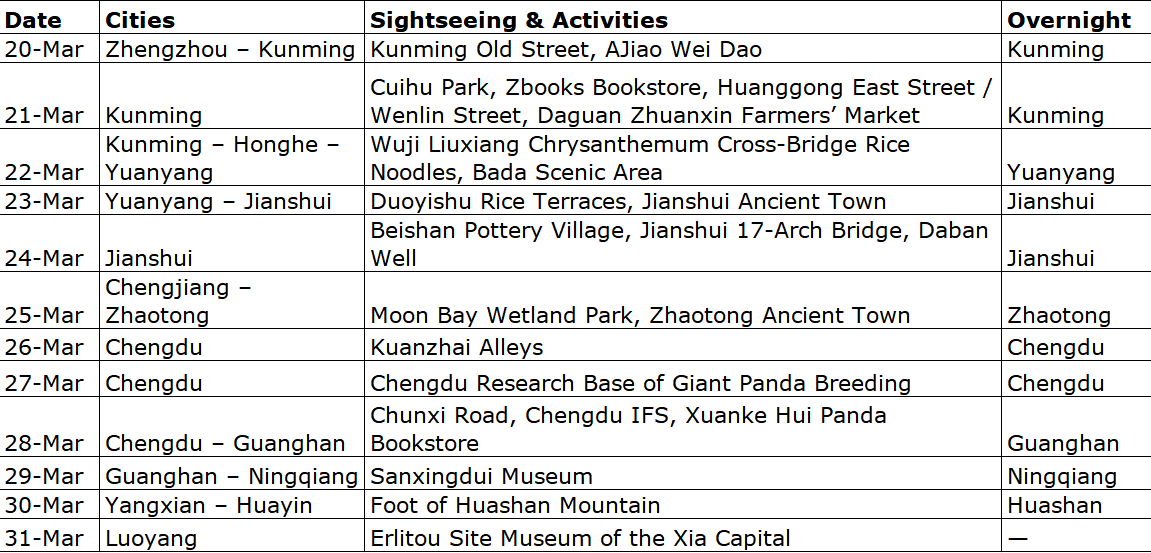
Our Itinerary:
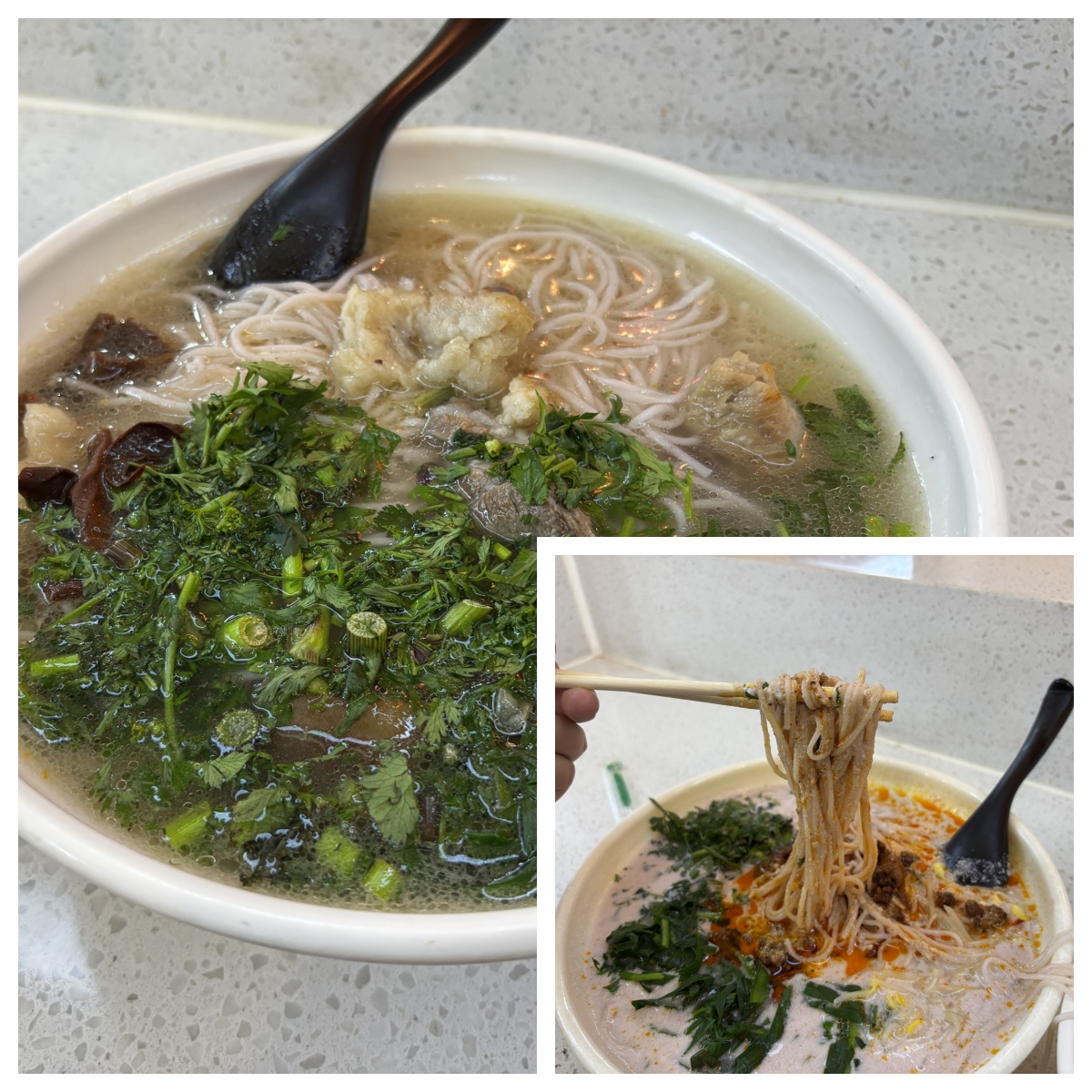
After clearing the airport, I strolled to the Old Street and had my first meal at Ajiao Wei Dao, tucked down an alley of the historic quarter. We ordered several styles of Yunnan rice noodles. That is the wonderful magic of Yunnan rice noodles: one staple food prepared in dozens of distinct flavours.
Pea paste rice noodles: thin rice noodles covered with a thick yet non sticky pea flour purée dense enough to cling to chopsticks. The first taste is rich pea aroma, followed by the smooth softness of rice noodles, finishing with fresh notes from seasonings.
Pork trotter rice noodles: tender rice noodles served in clear pork trotter broth, garnished with chopped spring onions, coriander, chilli powder and crushed peanuts — another truly memorable flavour.
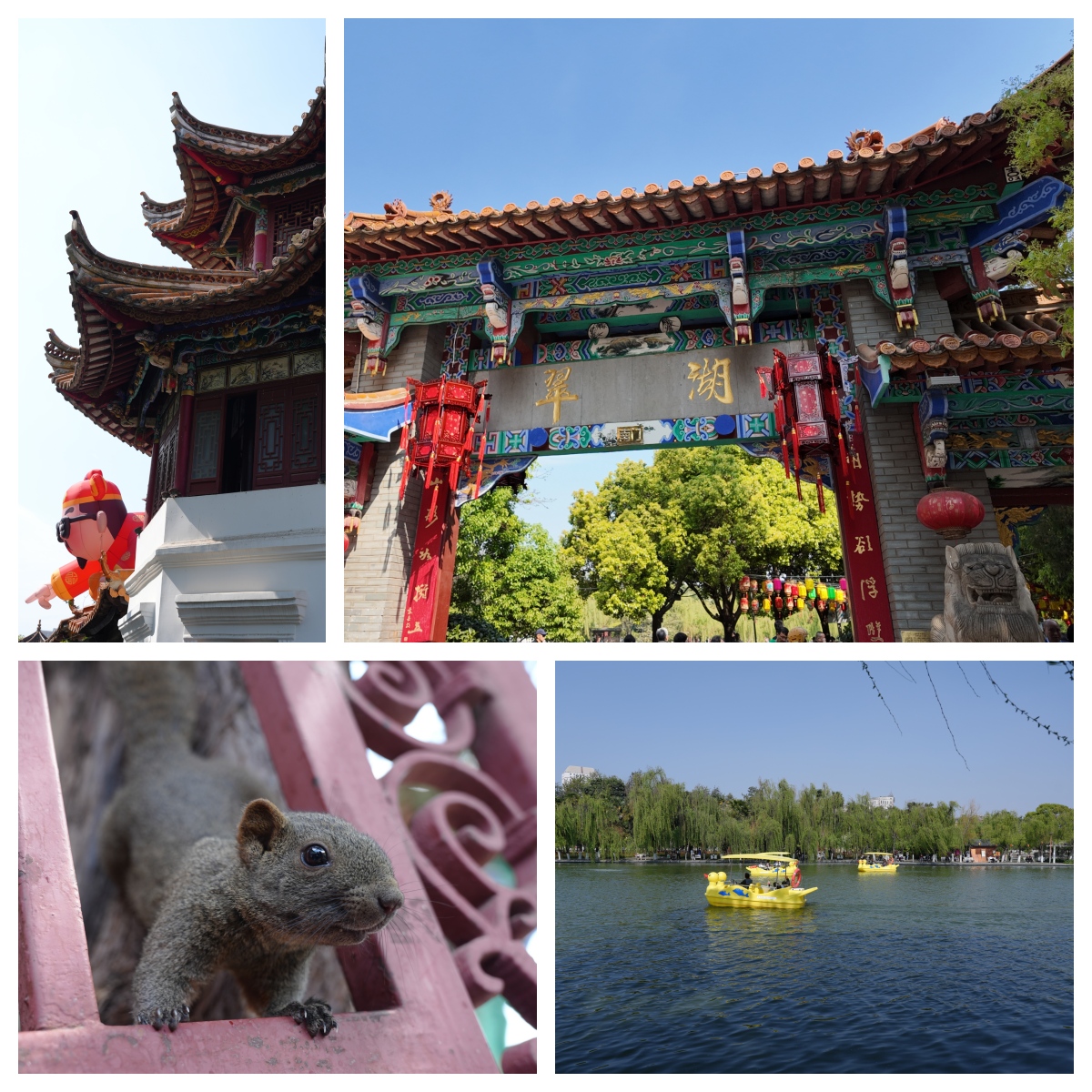
On our second day in Kunming, our first destination was the city’s blooming flowers. Cuihu Lake is not large; long dykes and small bridges divide its surface into sections, with weeping willows stretching along the embankment. The water is so clear you can see the backs of swimming fish. It is not far from the Old Street. Walking through the park offers exactly that kind of pleasant scenery you can chance upon en route.
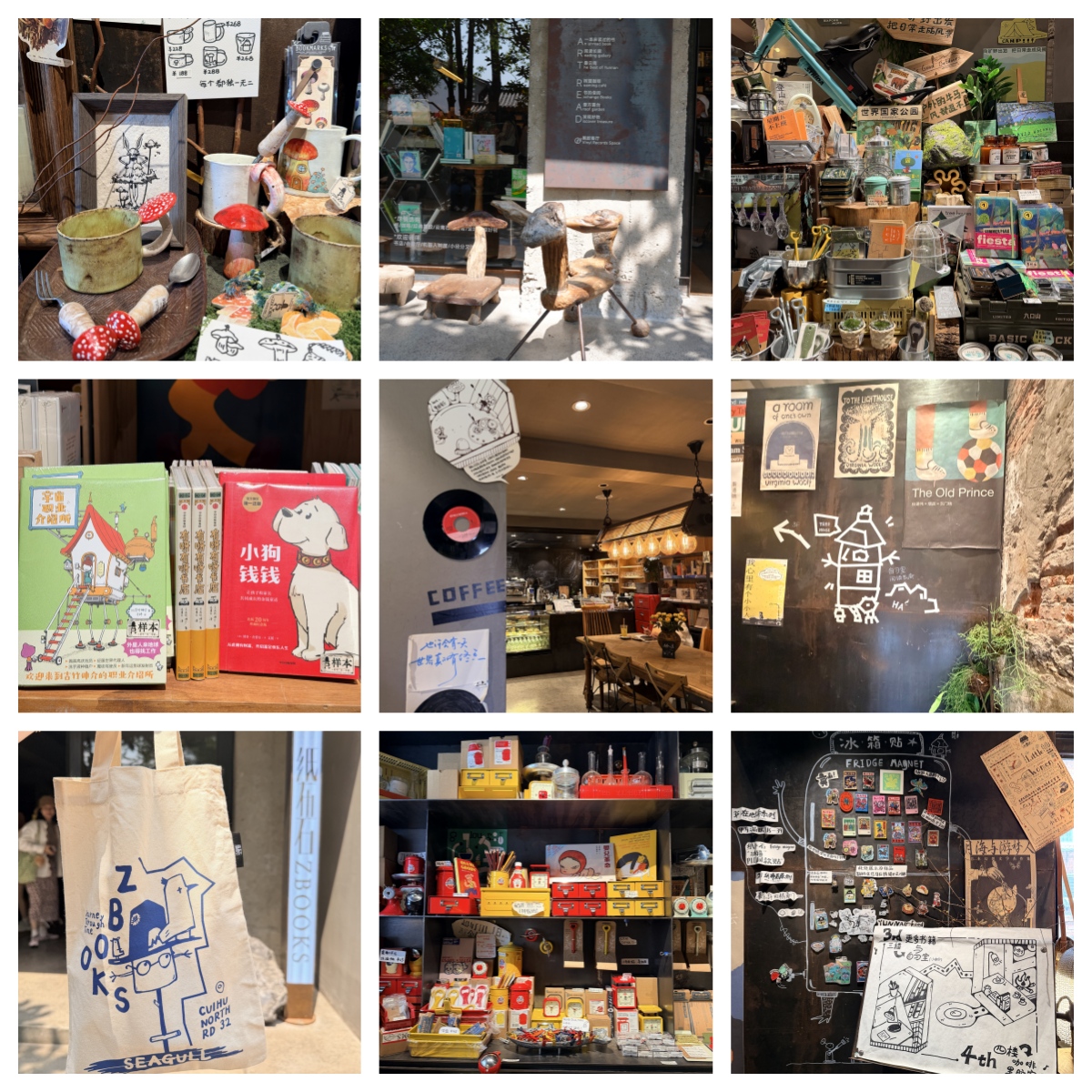
Heading towards Wenlin Street from Cuihu Park, you pass North Cuihu Road where a five storey grey standalone building houses ZBOOKS. Nicknamed the "Robot Treehouse", it features an industrial timber frame creating layered nested small spaces, like a fair tale labyrinth. Half the shop holds books of all kinds, while the other half displays hand crafted goods and stationery. There is also a café and a rooftop terrace garden surrounded by greenery, with views over Cuihu Lake and the grey tiled upturned eaves of the former Yuan Jiagu Residence. Exploring it feels like opening a blind box — every floor conceals undisturbed tranquillity.
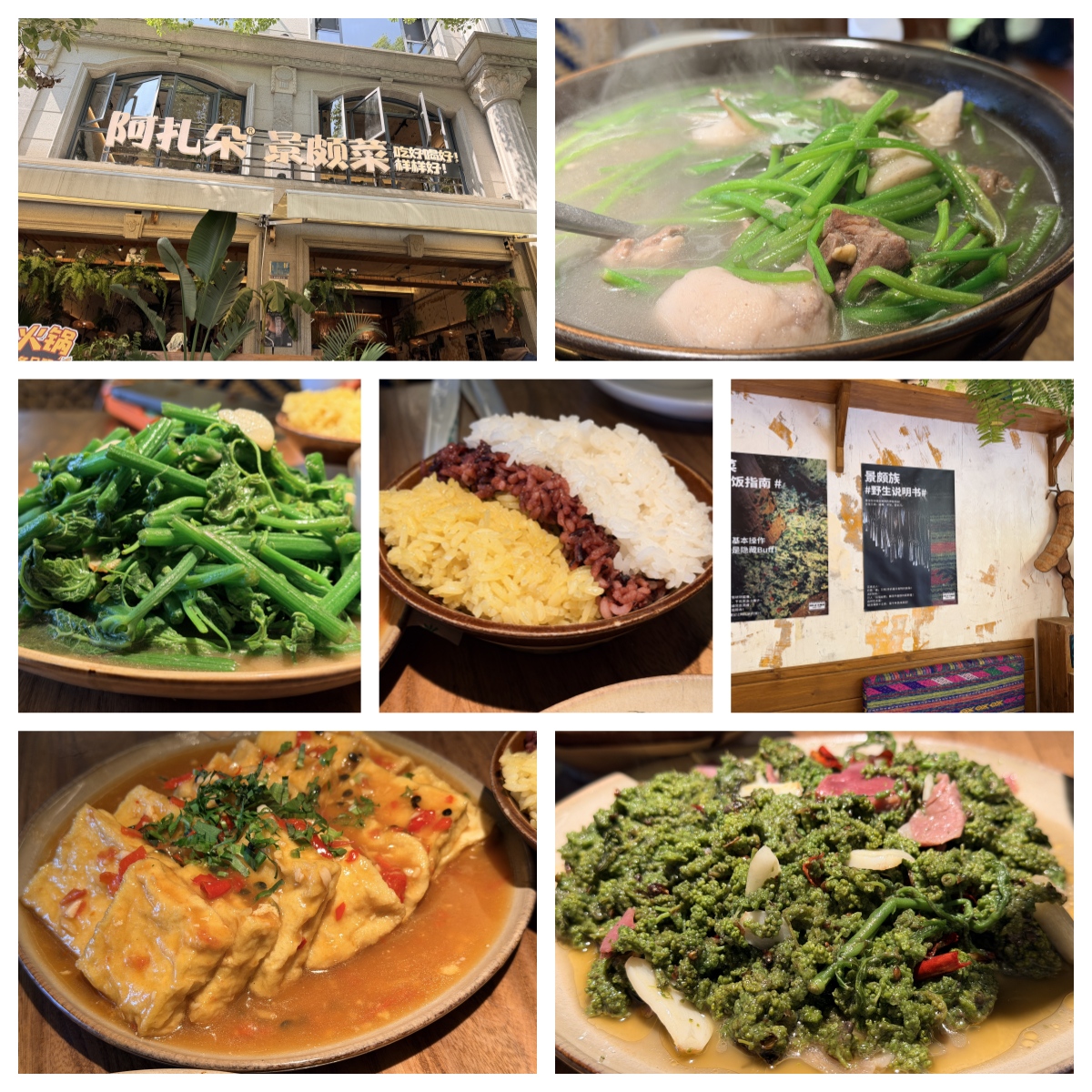
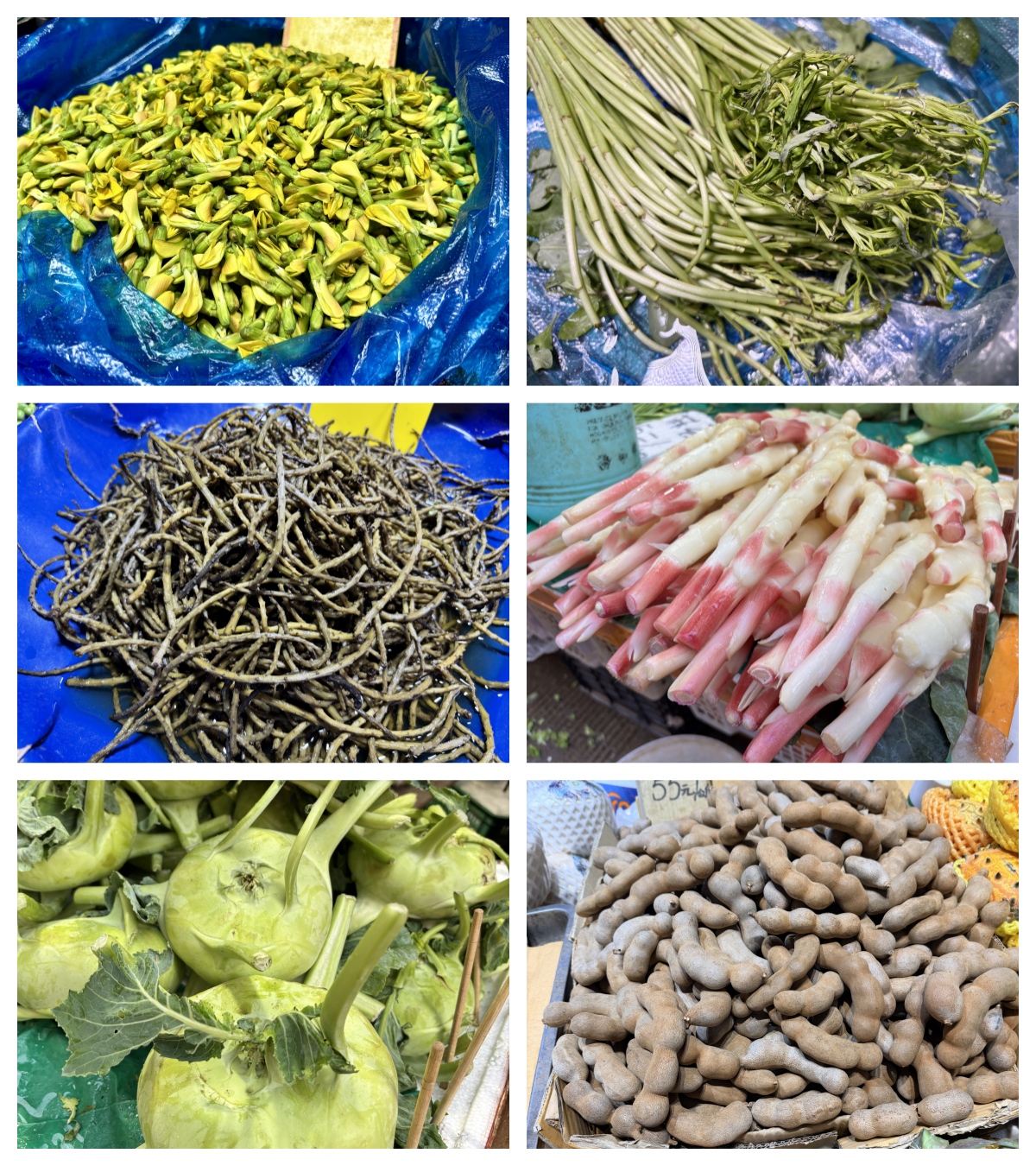
This is a seasonal Jingpo ethnic delicacy available only for a few short spring weeks. Palm flower, water hyacinth flower and pomegranate flower — it seems the Jingpo people can turn almost any blossom into a wonderful dish, full of seasonal ritual charm. We blindly ordered several unfamiliar dishes and were treated to an unexpected culinary feast.
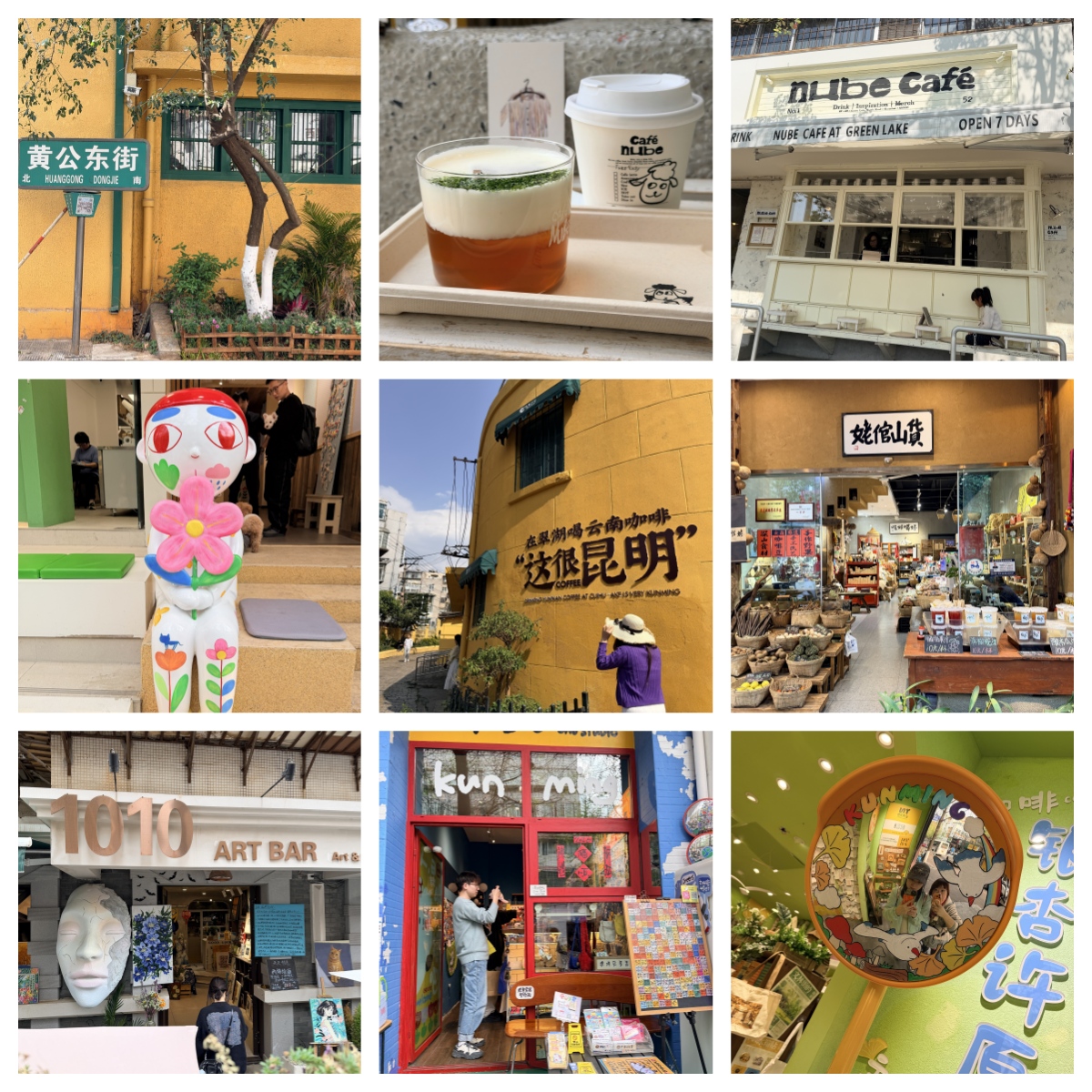
After lunch, we unlocked shared bicycles and cruised along Cuihu Road to Huanggong East Street, one of the best preserved blocks showcasing old Kunming urban fabric. Red brick buildings, arched door and window frames and vintage shop signs stack one upon another. It invites slow wandering and pausing to admire wall details. Cafés and second hand bookshops line the street — perfect spots to sit for half an hour for no special reason. A short detour to Wenlin Street is also rewarding. Once crowded with imperial examination candidates, it used to be lined with bookshops, brush stores and inns. Today it is a quiet tree shaded boulevard, ideal for sitting at a roadside café and savouring lazy afternoons.
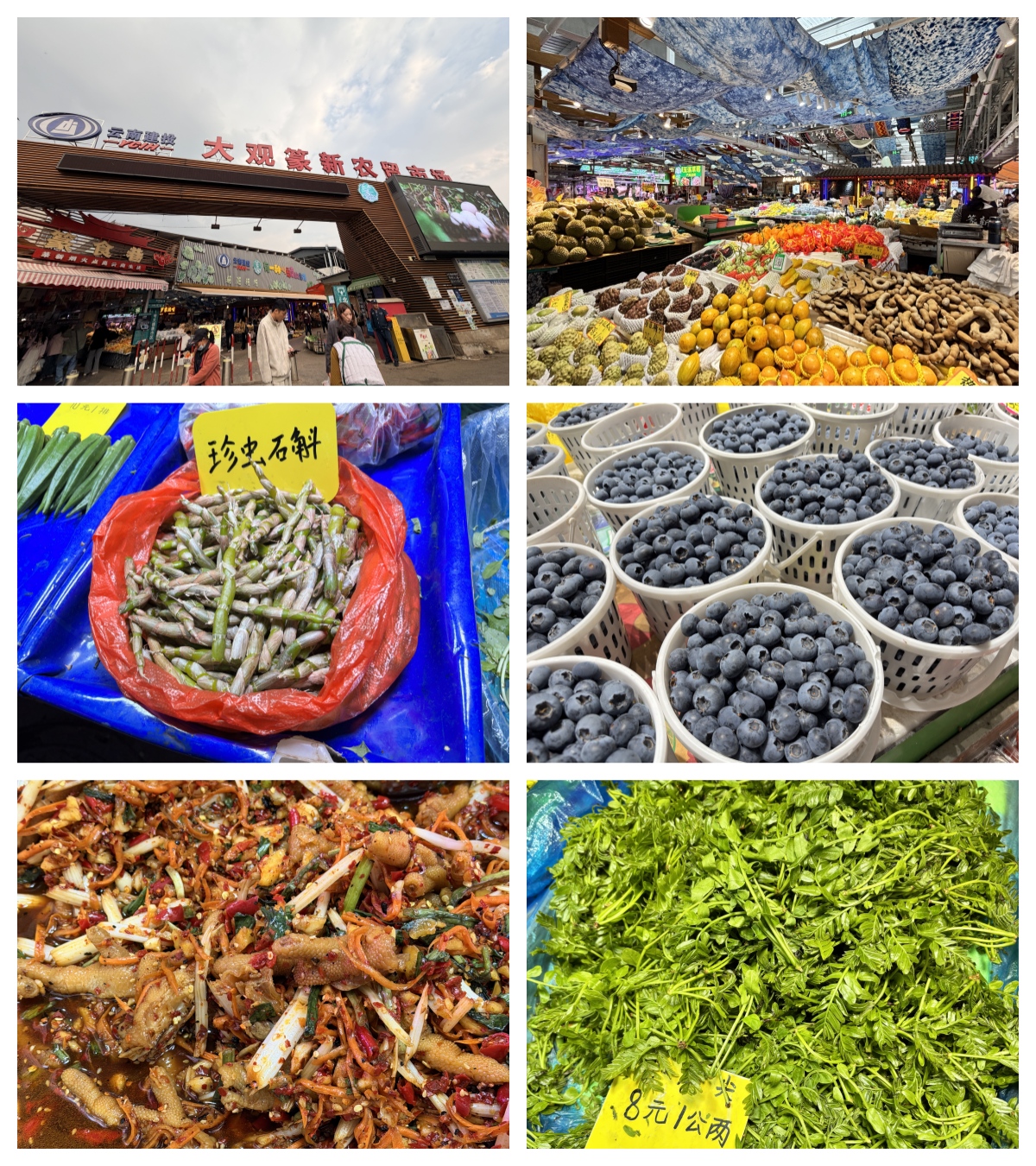
By evening after a full day’s sightseeing, tired of restaurant meals, we spontaneously decided to visit a local farmers’ market. Zhuanxin Market is the "kitchen of Kunming". Stalls queue with small melons, Chinese toona sprouts, eleutherococcus, countless unknown wild mushrooms, piles of chillies and aromatic herbs. Steam rises from stalls selling rice noodles, grilled tofu and marinated snacks, offering generous portions at affordable prices. March is blueberry ripening season, with more than a dozen varieties ranging from tart to sweet. Tasting several different types brings its own simple delight.
A one -hour- plus high speed train ride from Kunming brings you to Mengzi Honghe Railway Station. We met my parents there and kicked off the self -driving segment of our journey.
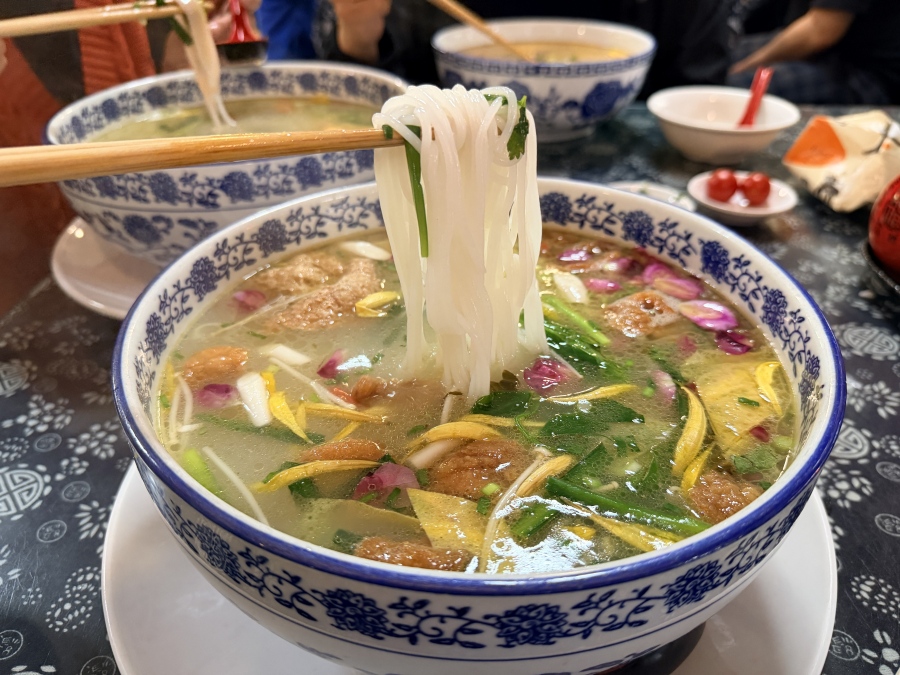
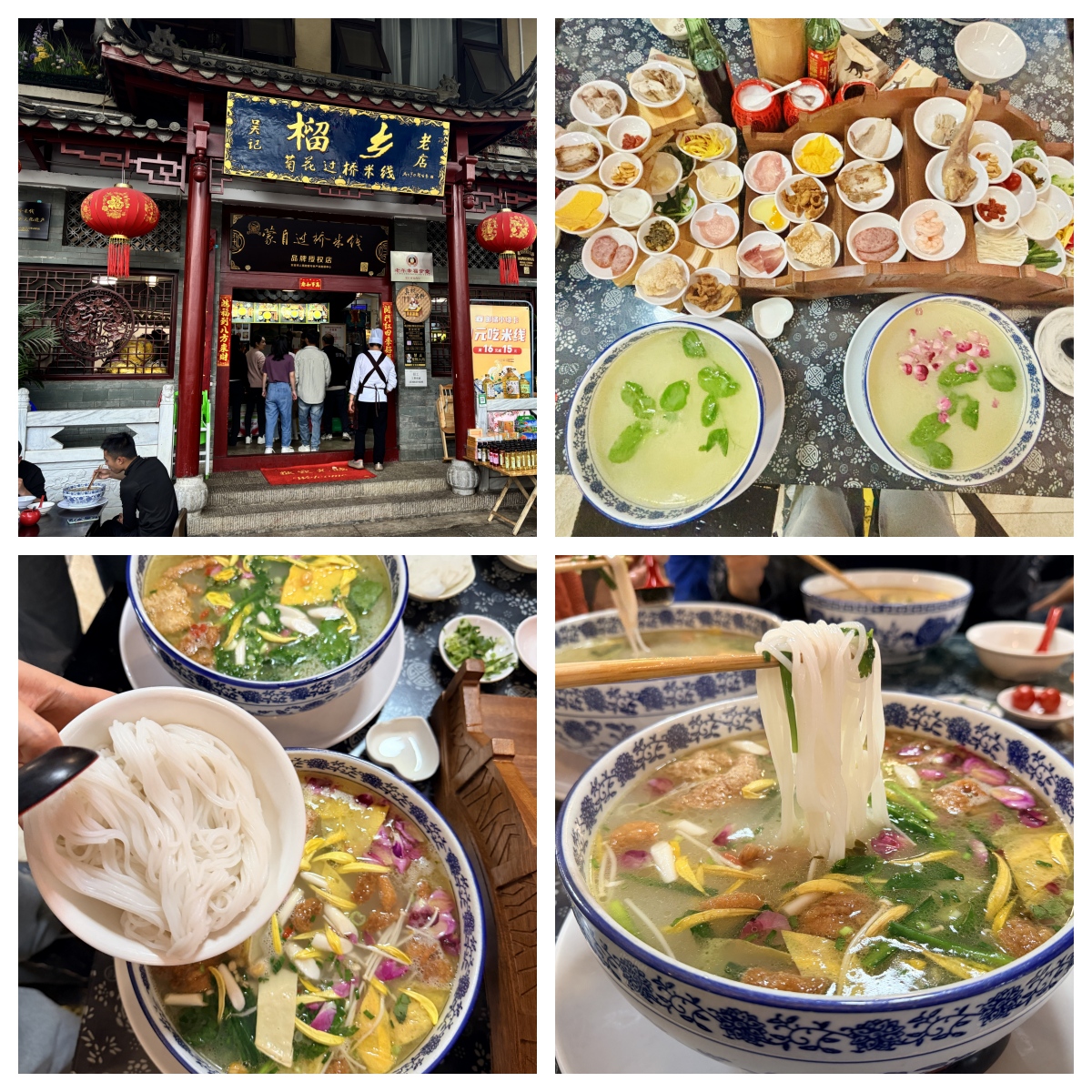
We arrived just at noon for authentic Mengzi rice noodles at Wuji Liuxiang Chrysanthemum Crossing the Bridge Rice Noodles. Golden and pale white chrysanthemum petals float thinly across the surface of hot broth. Scalding soup poaches raw meat slices, while rice noodles soak up chicken stock flavours, yielding a clean umami with subtle bitter floral notes. Served in large deep bowls still bubbling when set down, sealed by a top layer of oil that hides their fierce heat. There is proper etiquette for eating: add meat first, then vegetables, lastly rice noodles. Do not stir; let ingredients sink naturally. Adding thirty odd small side dishes one by one carries its own small ceremonial feeling.
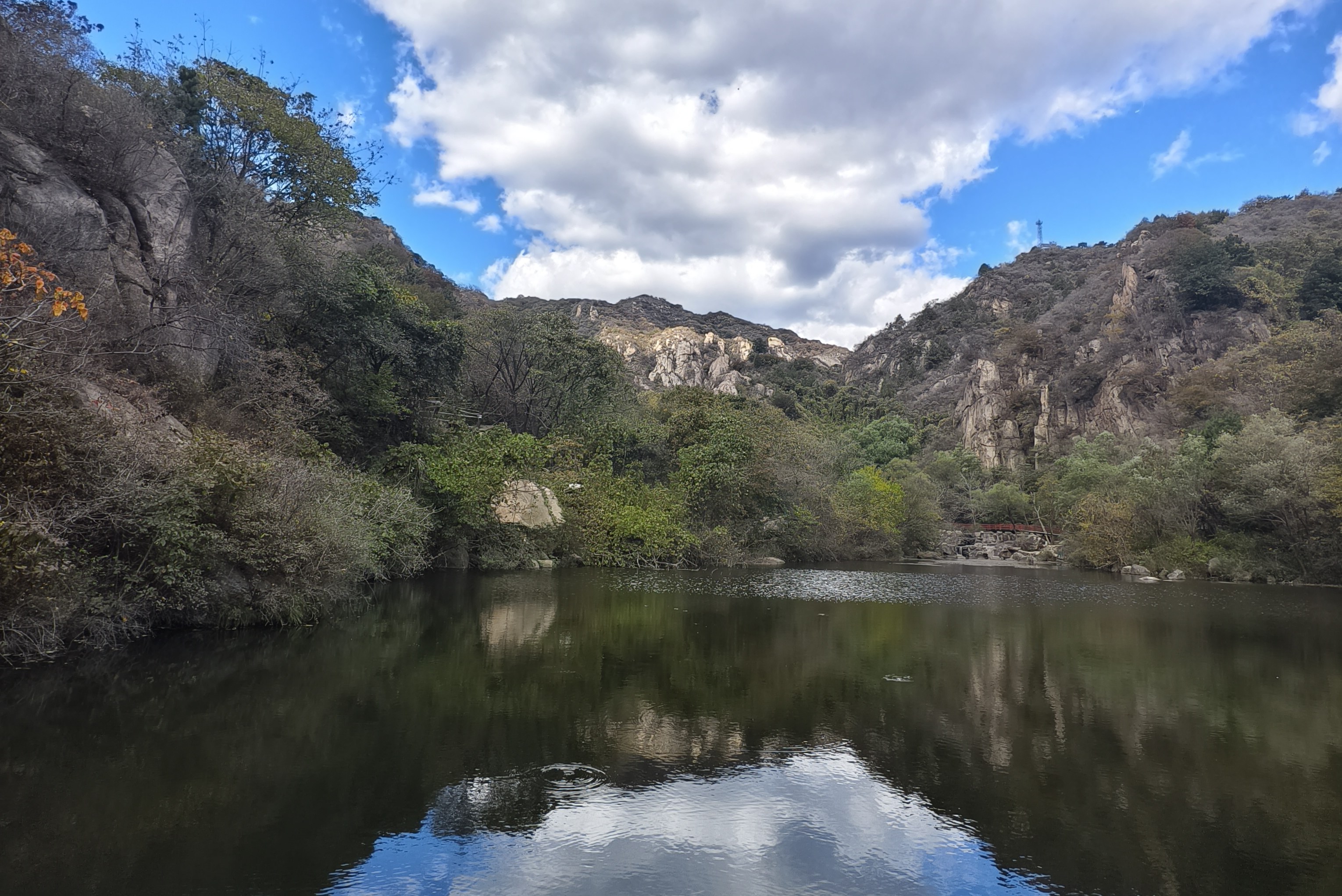
After our rice noodle lunch we set off onward. Bada Scenic Area impresses with warm toned light and layered lines. More than 3,700 terraces cascade from mountain foot to ridge, folding along hillsides in sweeping arcs shrinking down toward valley bottoms. Light gains texture after 4 p.m.: as the sun dips west, terrace water surfaces light sequentially from high ground down to the valley floor, as though thin gold leaf has been poured down from the mountain top.
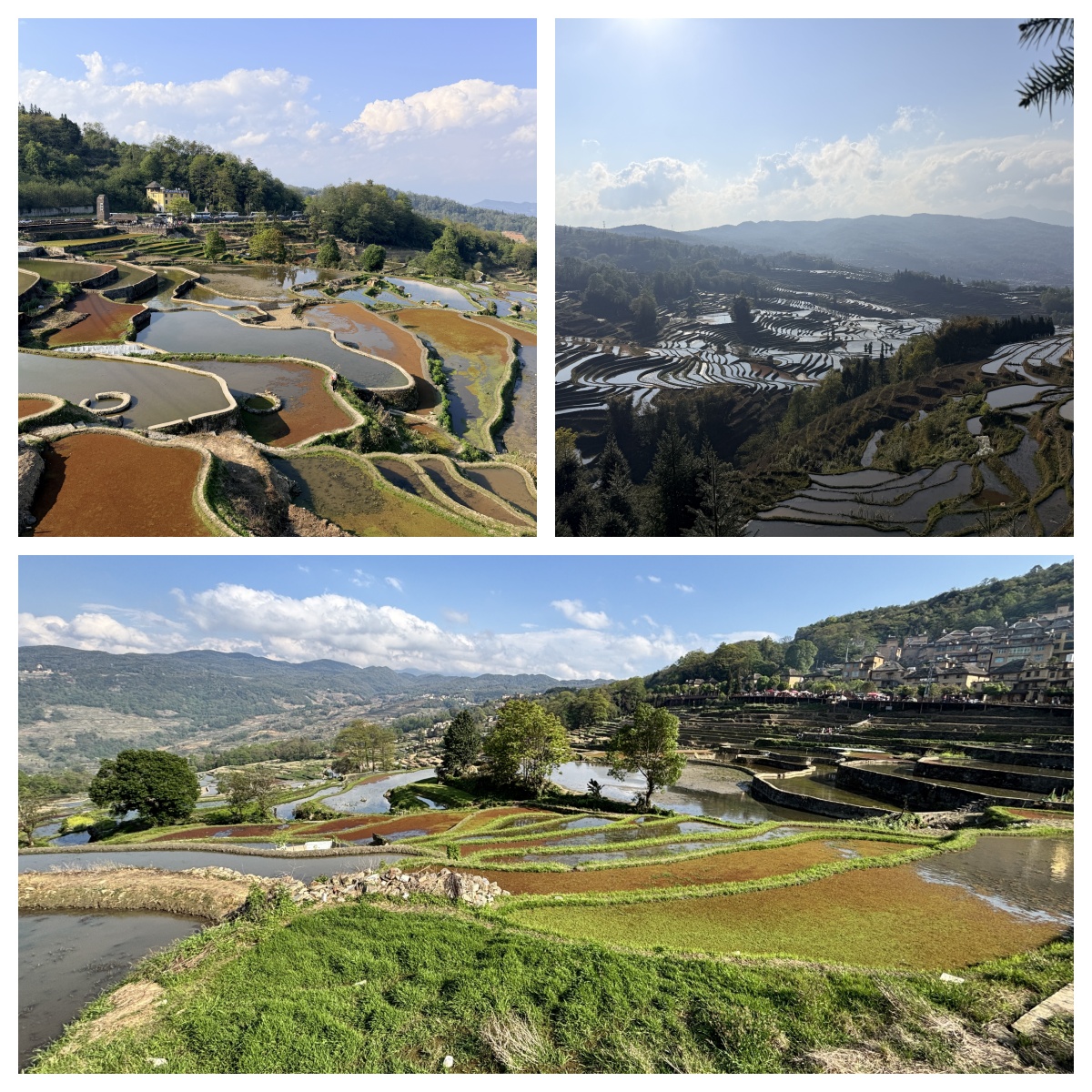
Duoyishu is one of Yuanyang’s prime sunrise viewpoints; book accommodation inside the scenic area. Our hotel served wonderful local Yuanyang home style dishes, also cooking with edible flowers, yet spicier and more sour flavoured compared with Jingpo cuisine.
March falls near the end of the terrace water filling period. Most plots still hold water — the season’s most breathtaking sight lies in these layered mountain side mirrors. Early next morning we claimed good positions on the hotel rooftop platform. The sky shifted from pitch black to deep blue; eastern clouds blushed orange pink, and light spilled upward across three thousand terrace levels. The whole valley turned into flowing silver foil, while distant mountain peaks loomed faintly through mist.

Formerly known as Lin’an, Jianshui was founded as the walled city of Huili by the Nanzhao regime during the Yuanhe reign of the Tang Dynasty. Huili means "great sea / lake" in Yi language, translated into Chinese as Jianshui. The ancient town retains its complete original urban layout, with over one thousand surviving relics from the Song, Yuan, Ming and Qing dynasties including Zhilin Temple and the Imperial Examination Pavilion, earning it the moniker "Museum of Ancient Architecture". Among them stands the Zhu Family Garden, the late Qing wealthy Zhu brothers’ 20,000 -square -metre mansion dubbed "Grand View Garden of Southern Yunnan". The compact old town can easily be explored on foot. Flagstone streets wind past old courtyards, with grilled tofu stalls, purple pottery shops and teahouses opening onto pavements. Unlike many over commercialised ancient towns across China, daily local life carries on here: residents buy groceries in the morning, drink tea in the afternoon and stroll in the evening, with visitors simply blending in.
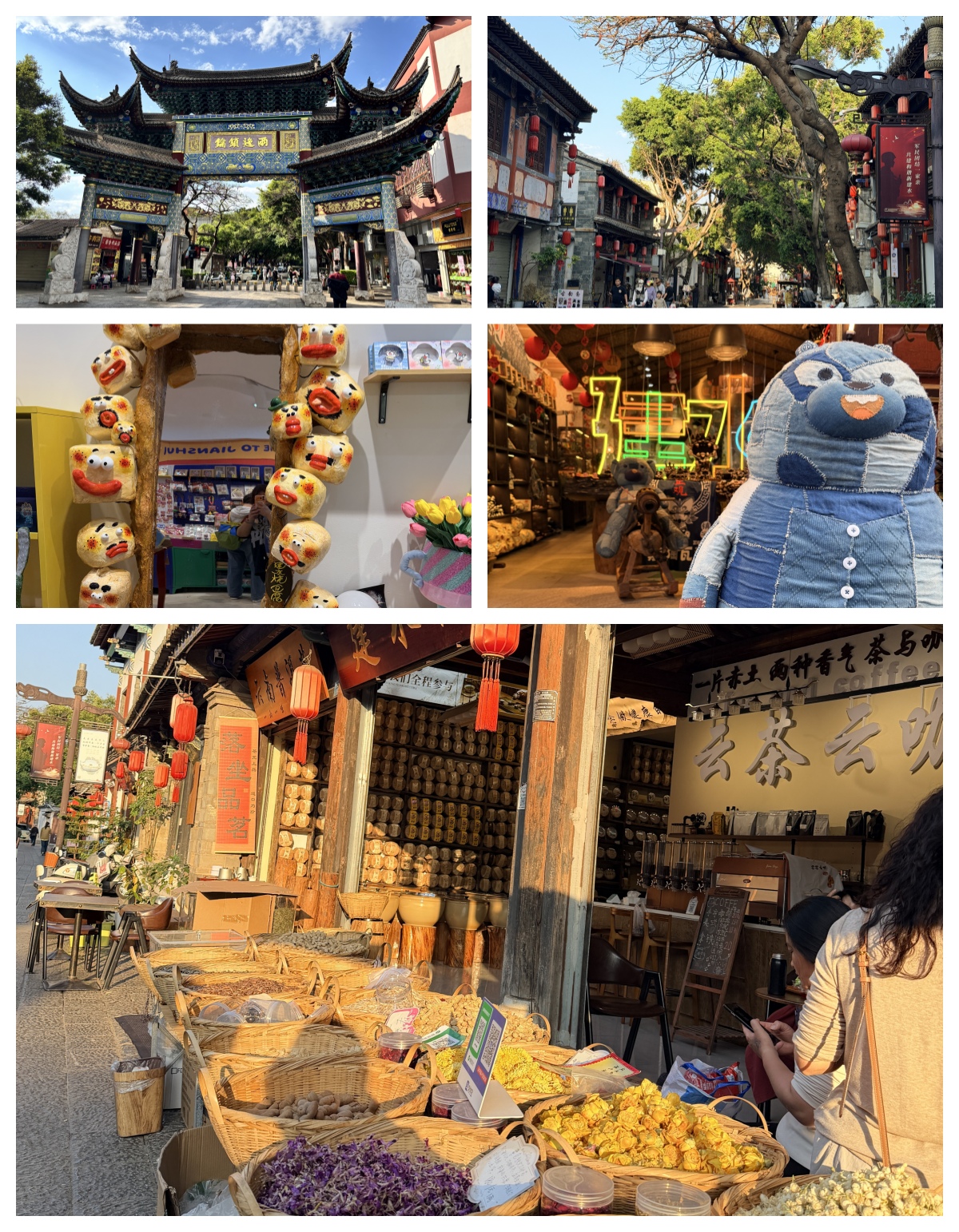
While wandering the ancient town we visited Xiangmanlou, a highly recommended old eatery raved about by our homestay host. Their signature steam pot chicken is incredibly fresh, alongside many seasonal blossom infused dishes. Sautéed aralia sprout with cured bacon delivers a wonderfully unusual flavour that should not be missed.

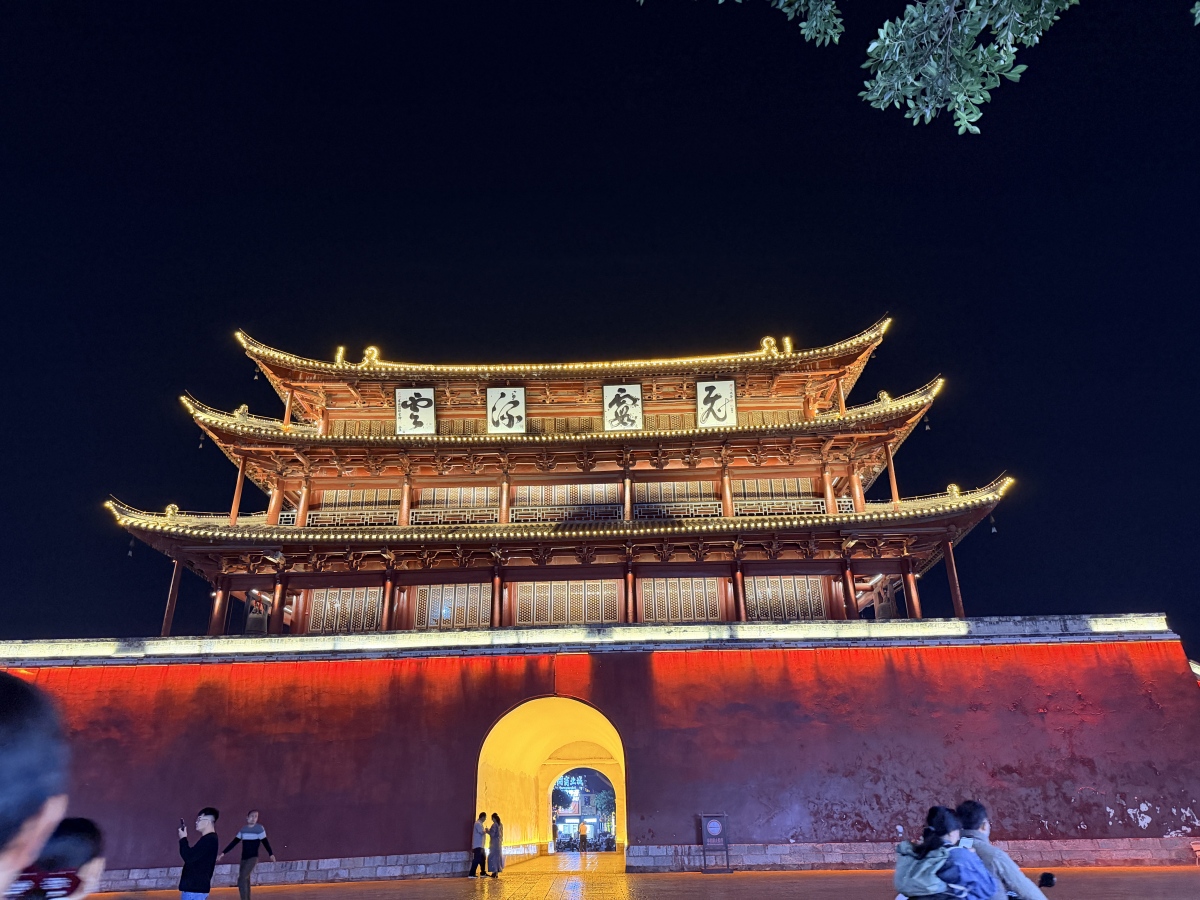
While ambling through town at dusk we reached Chaoyang Tower, the only surviving city gate tower of ancient Jianshui. Our Chinese- style courtyard inn stood nearby. Originally called Yinghui Gate, this eastern tower of Lin’an Prefectural City was completed in 1389 (the 22nd year of the Hongwu reign of the Ming Dynasty). Its architectural form mirrors Beijing’s Tiananmen Gate — built 28 years earlier — so it is nicknamed "Little Tiananmen" and honoured as "No.1 Tower of Yunnan Prefectures". After dark, warm yellow light washes over multi layered eaves and horizontal plaques, casting eave shadows across city walls. Climb the tower for panoramic views over the old town.
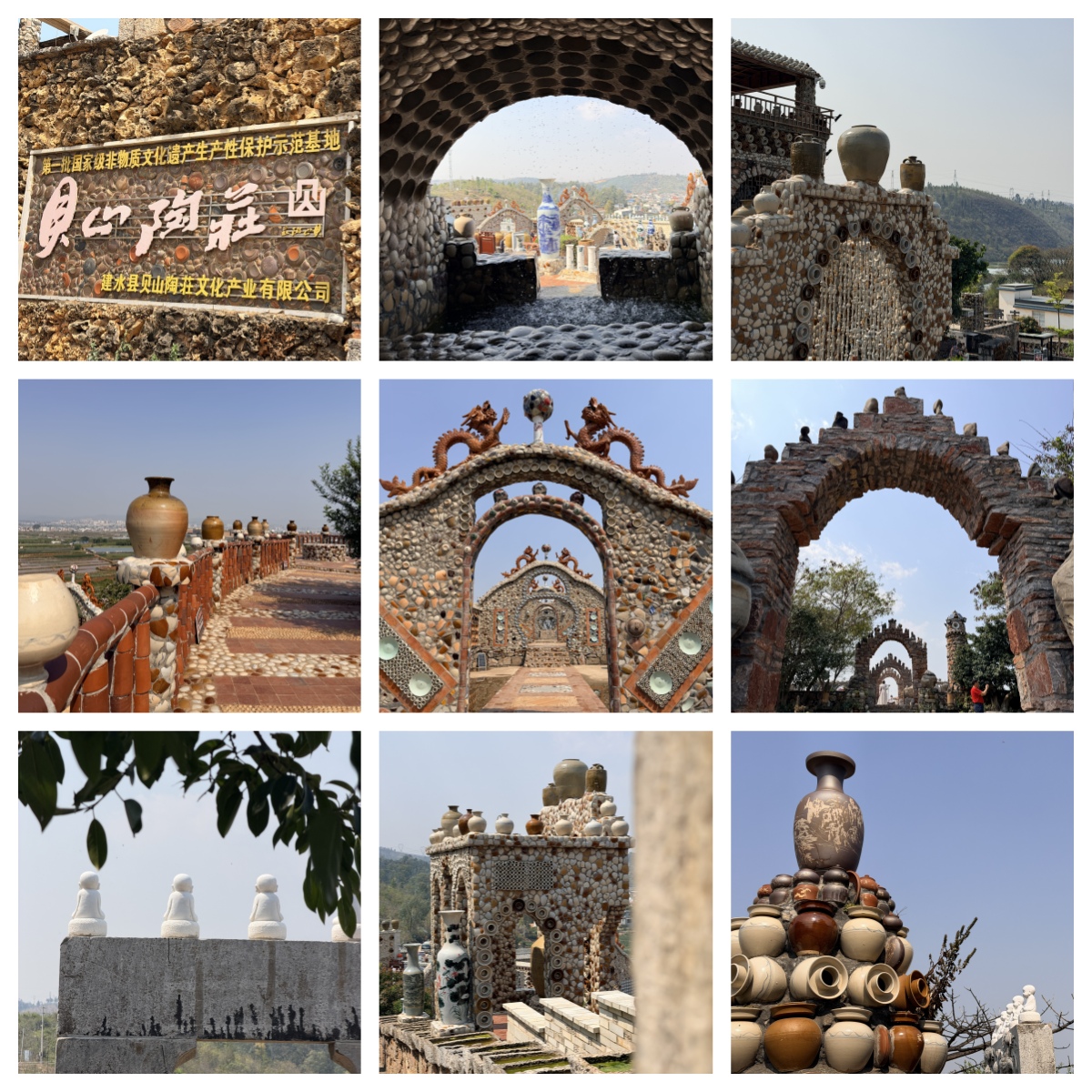
Early next morning we headed straight for Beishan Pottery Manor on Jianshui’s outskirts, a dream like landscape piled with pottery jars and fragments. Countless earthen pots are stacked into towers and walls; broken pottery shards embed steps and flower beds. When slanted sunlight falls across the slope, everything glimmers as if scattered with crushed gold.
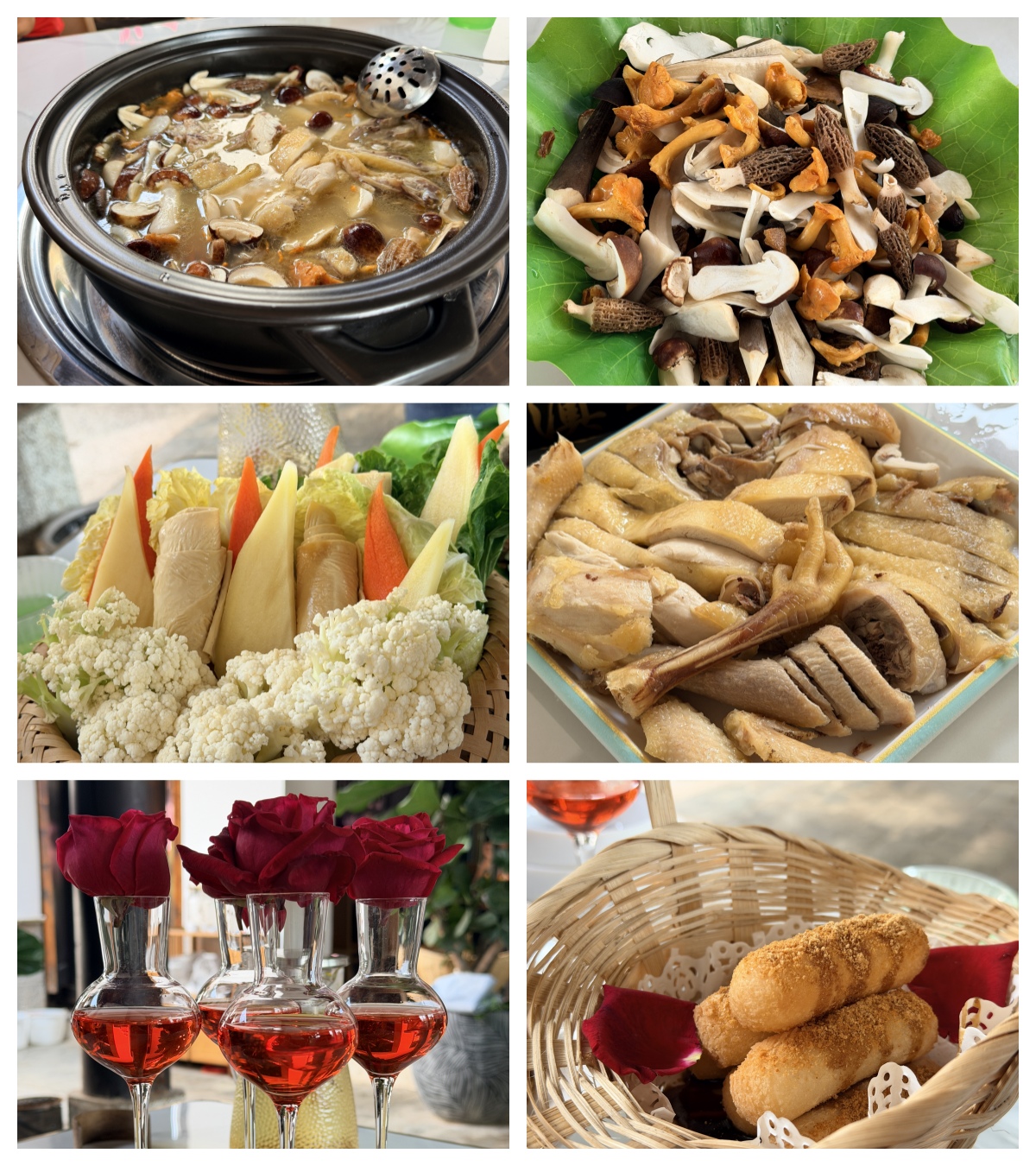
It was lunchtime after visiting the manor, so we hurried back to town for Yunnan wild mushroom hotpot. The broth simmers slowly with free range chicken and smells mouth wateringly good the moment it arrives. All mushrooms are freshly picked mountain produce: termite mushrooms, green head mushrooms, boletes, dried fragrance mushrooms and matsutake, each with distinctive rustic appearances. Once thick- sliced into the pot you must wait forty full minutes for thorough cooking. Sip a bowl of mushroom and chicken broth; the rich forest umami is absolutely stunning.
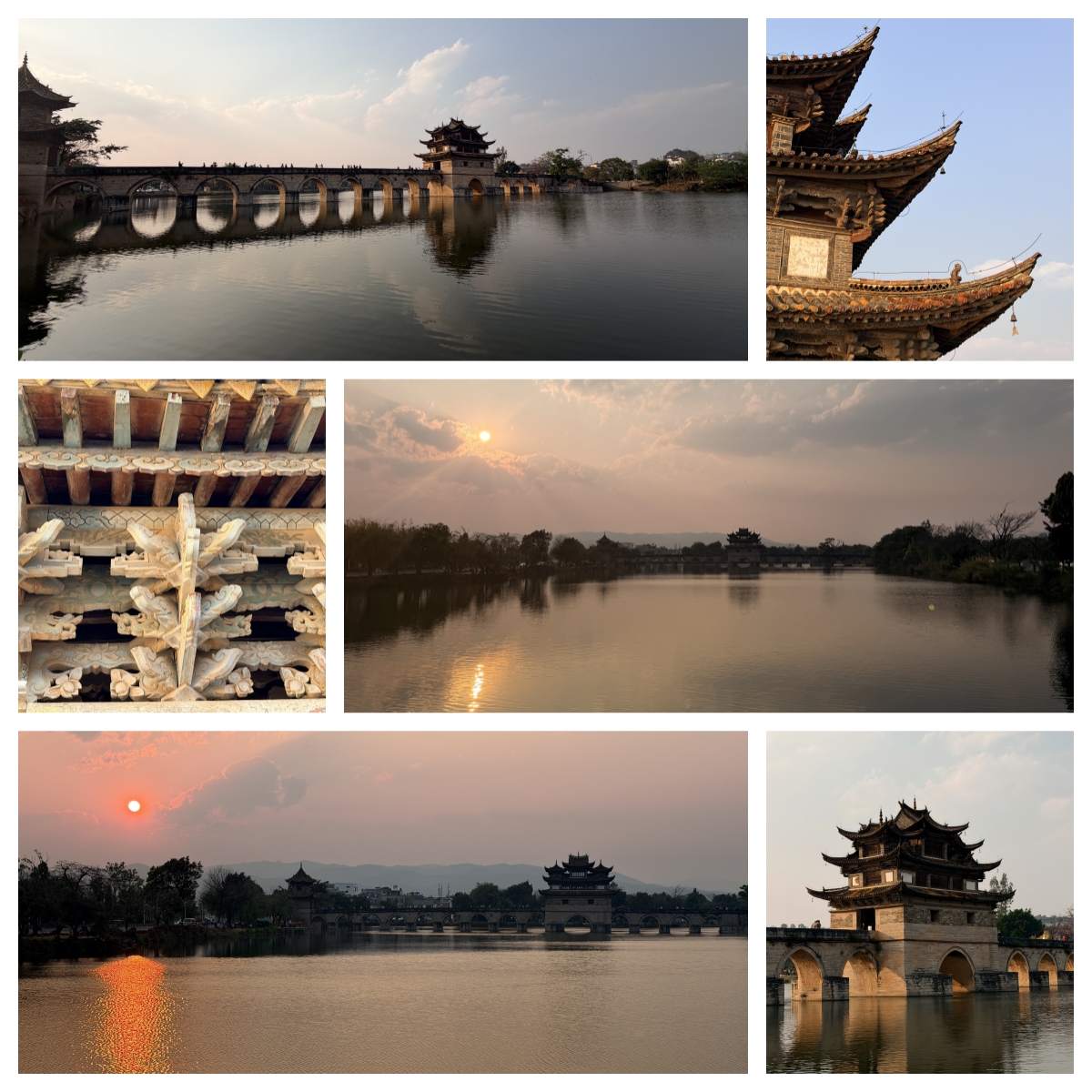
In the afternoon we drove to Seventeen Arch Bridge for sunset. Located roughly five kilometres west of town at the confluence of the Lujiang and Tachong Rivers, it is also known as Double Dragon Bridge for the rivers winding like two dragons. Pavilions and towers rise on the bridge; the three storey square central pavilion is called "Grand View Tower of Southern Yunnan". Together with the Seventeen -Arch Bridge at the Summer Palace in Beijing, they are celebrated as "the north south twin jewels". At sunset golden light streams through arch openings, bridge and water reflection merging with gilded outlines. Unfortunately weather conditions denied us that famous golden framed view, yet the sunset itself remained beautiful.
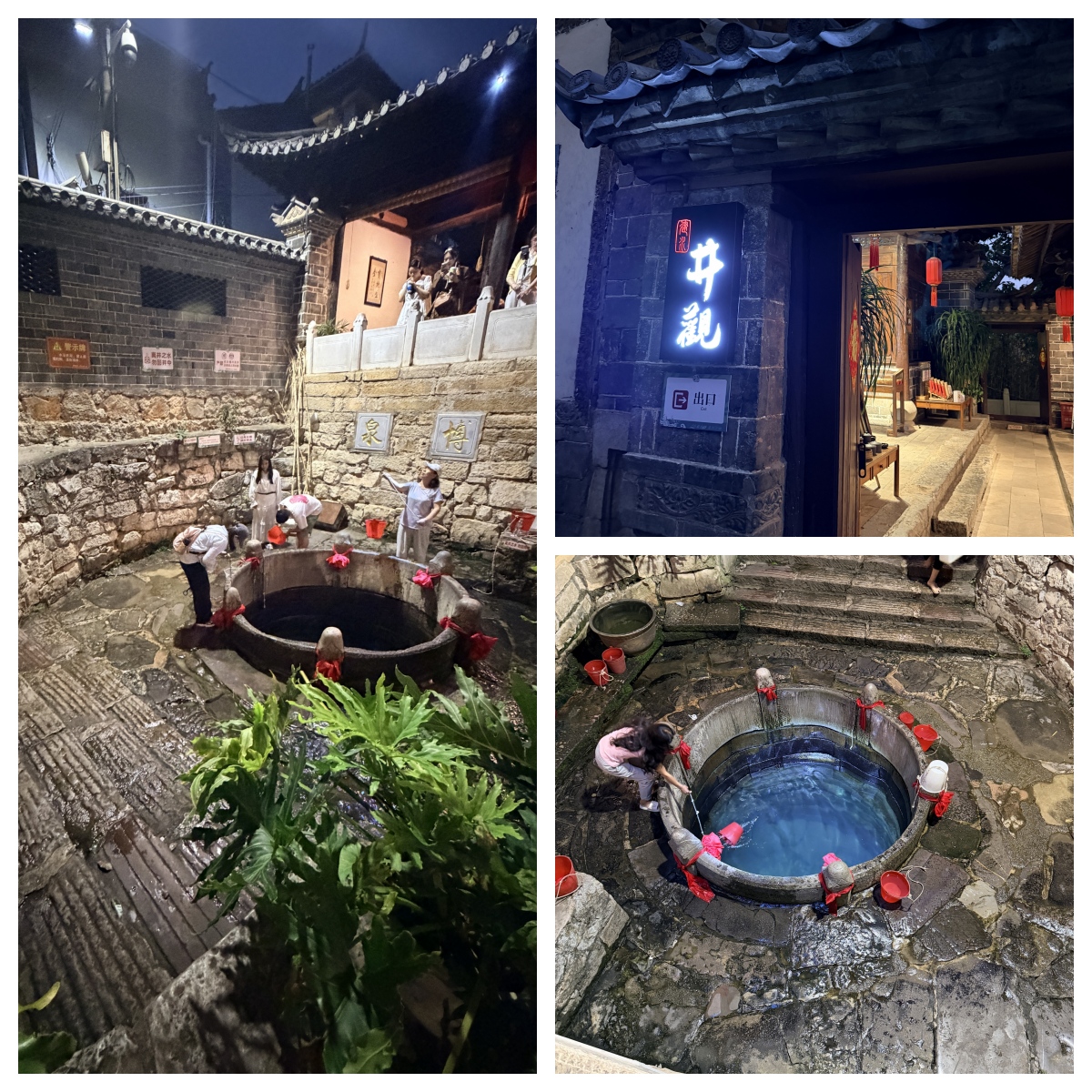
On our return to town we detoured to Daban Well at No. 37 West Main Street of the old town. Its 2.7 metre diameter mouth is enclosed by six huge curved stone slabs. Deep rope worn grooves on the well parapet bear witness to more than six hundred years of history. Locals say: "First dug Daban Well, then built Lin’an City." Even today old town residents still come here to draw water, and visitors may try their hand at fetching water too.
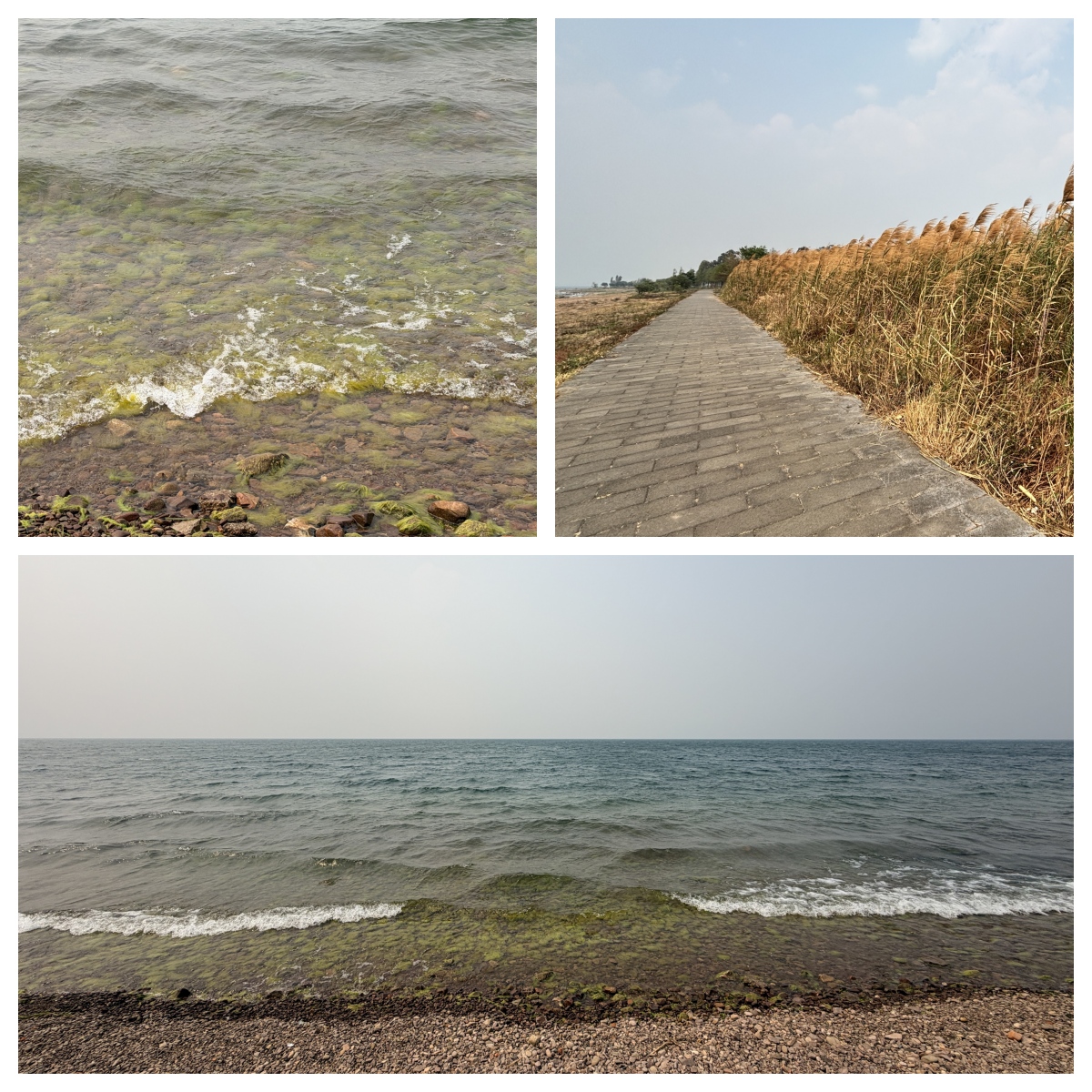
We set off early for our next destination. Our route looked rather awkward on the map, yet it was worth it to behold Fuxian Lake: we drove halfway round the lake shore. Moon Bay lies on Fuxian Lake’s northern bank, almost merging with the lake itself. After entering the park we rented shared electric scooters for an hour’s joyful ride. You can stop anywhere along the way to watch lake waves roll in. Water colours shift in layers: clear pale green close to shore deepening into rich blue further out. Interlacing wetland waterways support lush aquatic plants; swaying reeds and long wooden boardwalks compose another delightful scene.
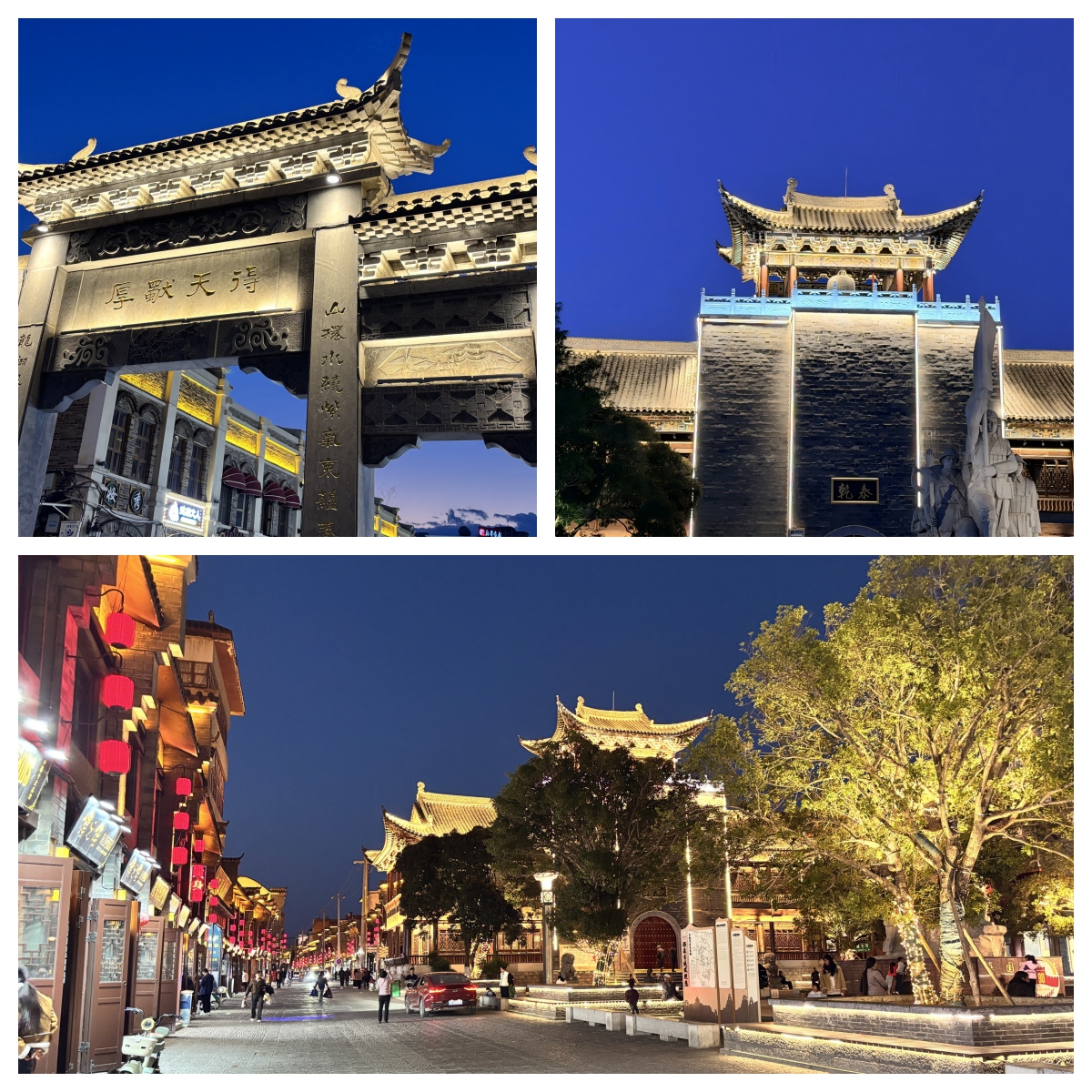
We drove onward and reached Zhaotong Ancient Town at dusk. Main streets still retain flagstone surfaces; even carriage ways are not asphalt, but worn ancient roadways polished smooth by centuries of pedestrians and horse carts. Streets are lined with traditional Chinese style shop fronts and courtyards. This place is reputed to be a popular summer escape for people from Sichuan.
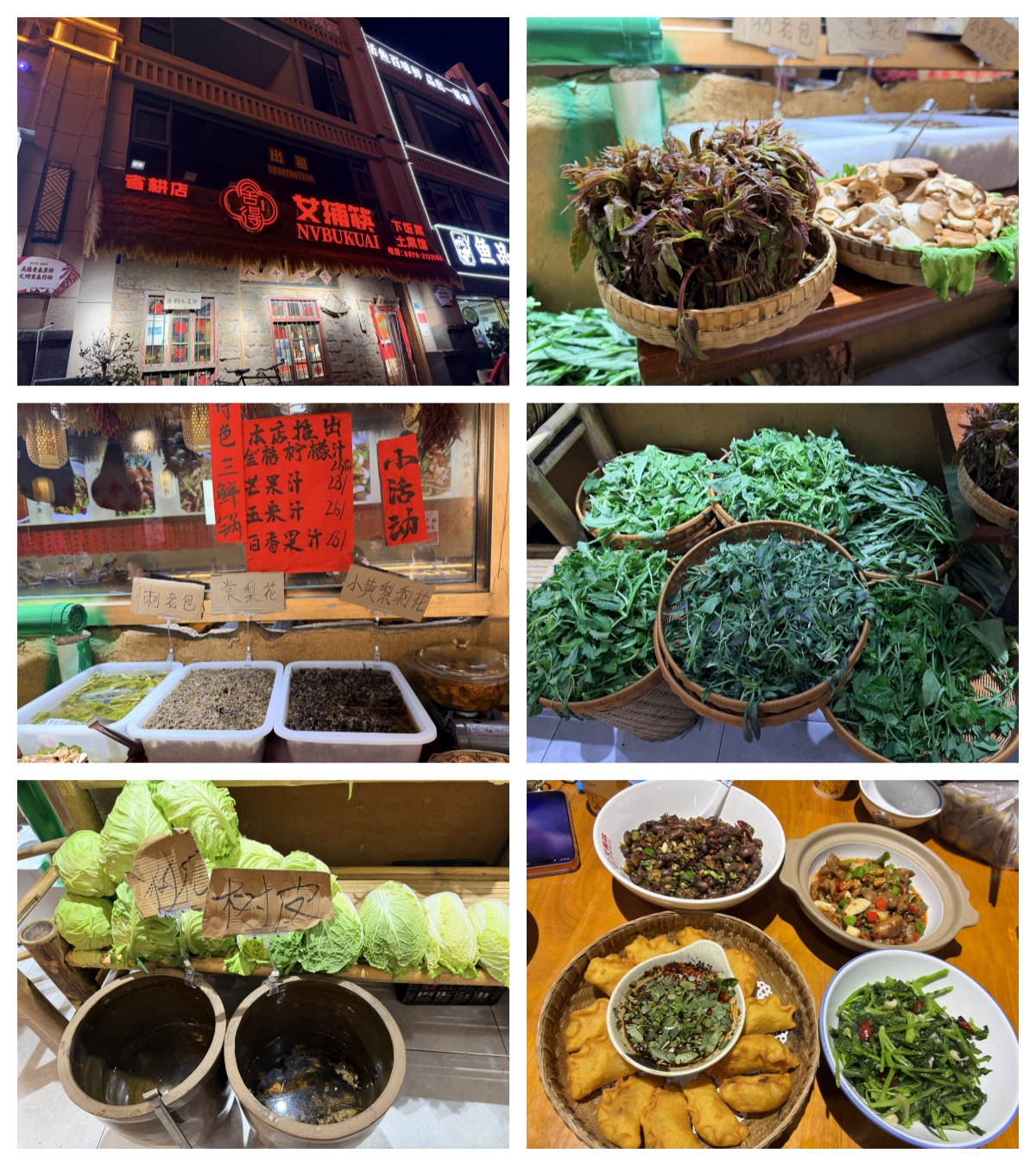
Asking local residents on the street, we were recommended an authentic home style restaurant with great down to earth atmosphere. All fresh ingredients are displayed near the entrance for you to pick. Faced with so many unfamiliar produce items, we simply ordered local specialty dishes on the owner’s suggestion. Flavours lean towards Sichuan style cooking with moderate chilli heat.
We left early next morning and arrived in central Chengdu at sunset. Dropping luggage we immediately visited Kuanzhai Alleys, consisting of three parallel old lanes: Kuan Alley, Zhai Alley and Jingxiangzi Alley, preserving the layout of the Qing dynasty Manchu walled quarter. Crowds and heavy commercialisation are undeniable. Yet the old elm trees in Kuan Alley, courtyard gate heads in Zhai Alley and the brick inscription wall in Jingxiangzi Alley — embedding historical bricks to create a timeline — are the most worthwhile highlights. A final serving of baby bok choy perfectly rounded off our day.

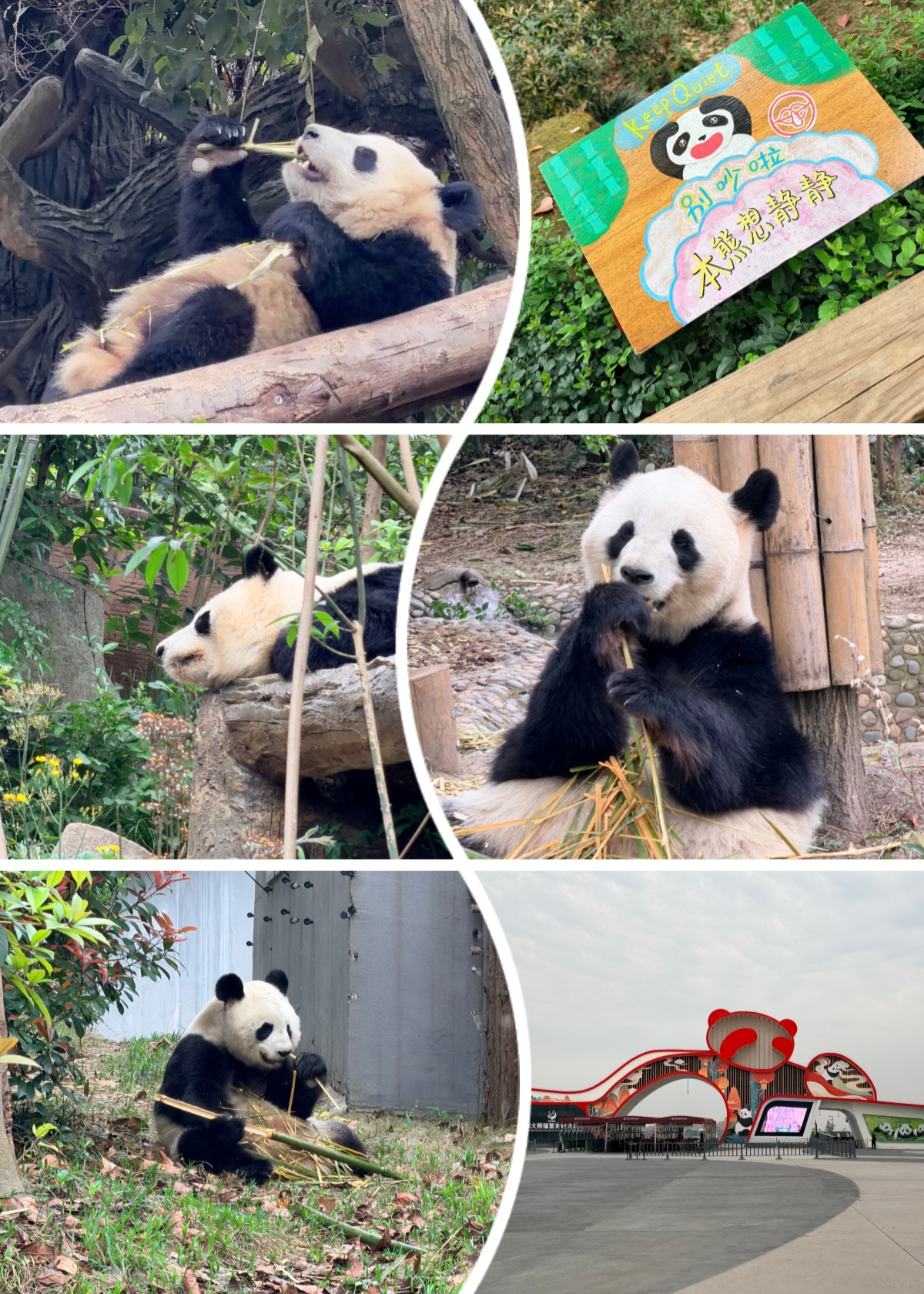
We headed for the panda base early the next morning. Book tickets online one day in advance; buying sightseeing bus tickets alongside is also recommended. There is a golden rule for panda watching: arrive very early! Pandas "start work" at 8:30 a.m., so secure viewing spots beforehand. Pandas are lively in early morning: munching bamboo contentedly, lying spread eagled on their backs, rolling around and clambering playfully on frames, slow moving yet utterly adorable. If seeing the star panda Huahua is not your priority, enter via the new zone gate and tour backwards to encounter many more fluffy giant pandas.
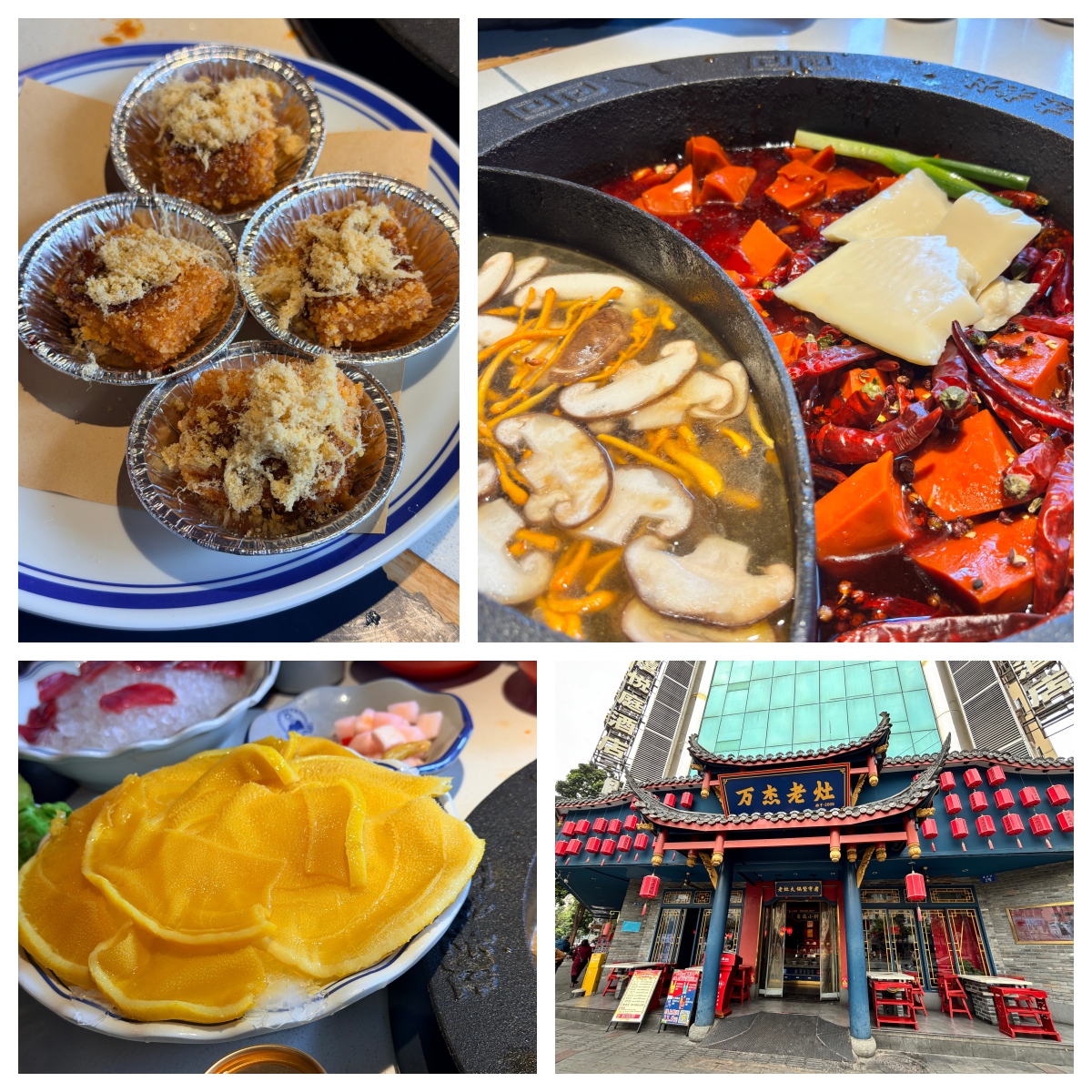
After viewing pandas it was lunch time, and Chengdu demands a hot pot meal. Laozao hotpot features a rich solid beef tallow broth. For tripe follow the classic "dip -and- lift-seven or- eight -times" rule: lift and shake in boiling soup, remove once edges curl, dip in sesame oil and g arlic sauce for crisp crunchy bites. Thick -cut pork throat needs ten seconds’ boiling for perfect crunchiness. Duck intestines are ready once they curl up. Signature thinly sliced marinated tender beef is fished out as soon as it changes colour, incredibly soft. Crispy fried pork serves as pre- hot pot snack: delicious eaten straight or simmered soft in the broth. Brown sugar glutinous rice cakes close the meal: crispy outside, chewy inside, dusted with soybean powder and drizzled with brown syrup — the only sweet counterpoint to the fiery red pot feast.
The following morning my younger sister and I went shopping. Chunxi Road Pedestrian Street is Chengdu’s iconic bustling commercial thoroughfare, open 24 hours a day, with wide pavements packed with malls and time honoured shops. Illuminated sign boards glow after dark. Its charm lies in liveliness: not refined elegance, but crowds, lights and lively noise.
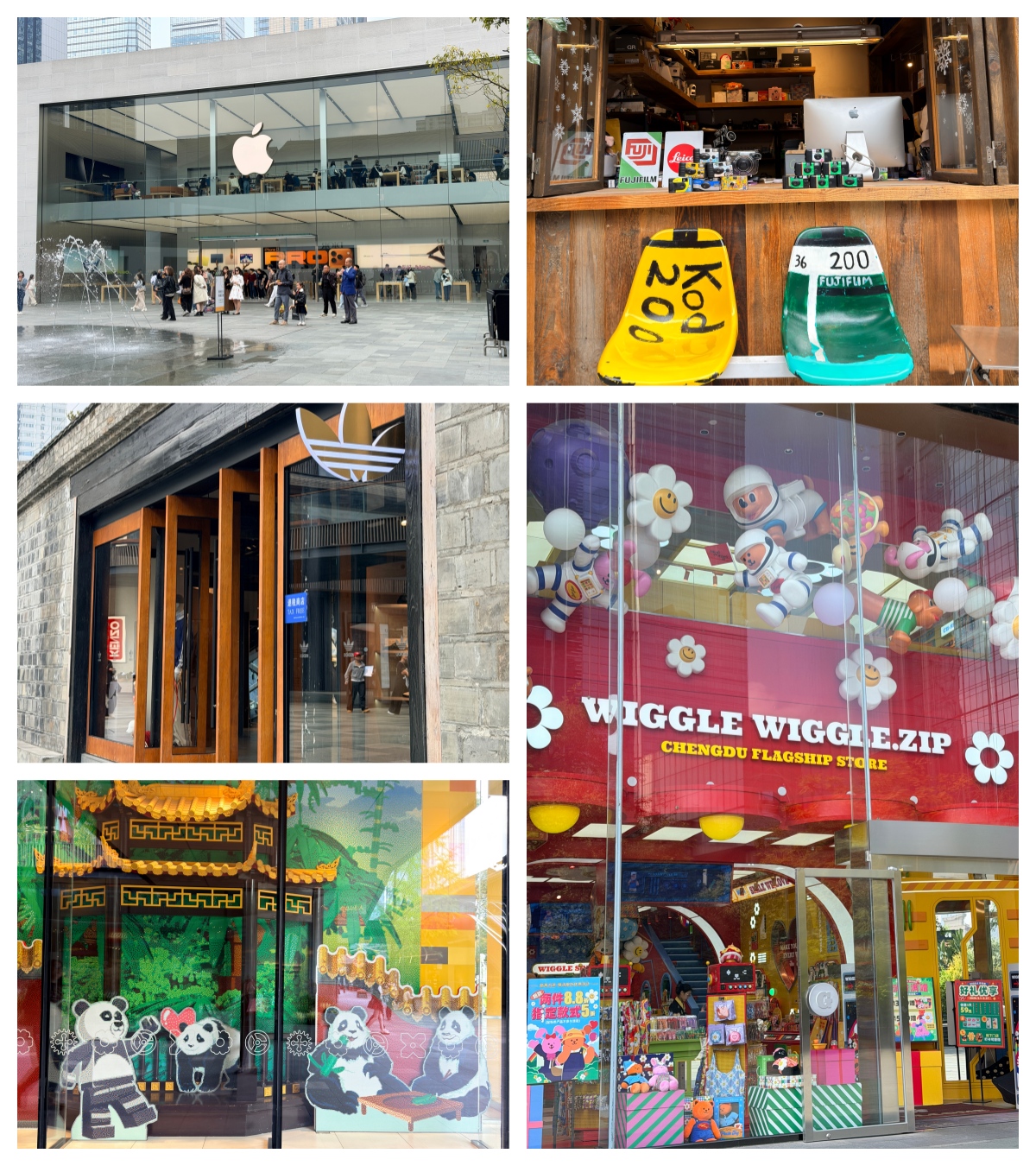
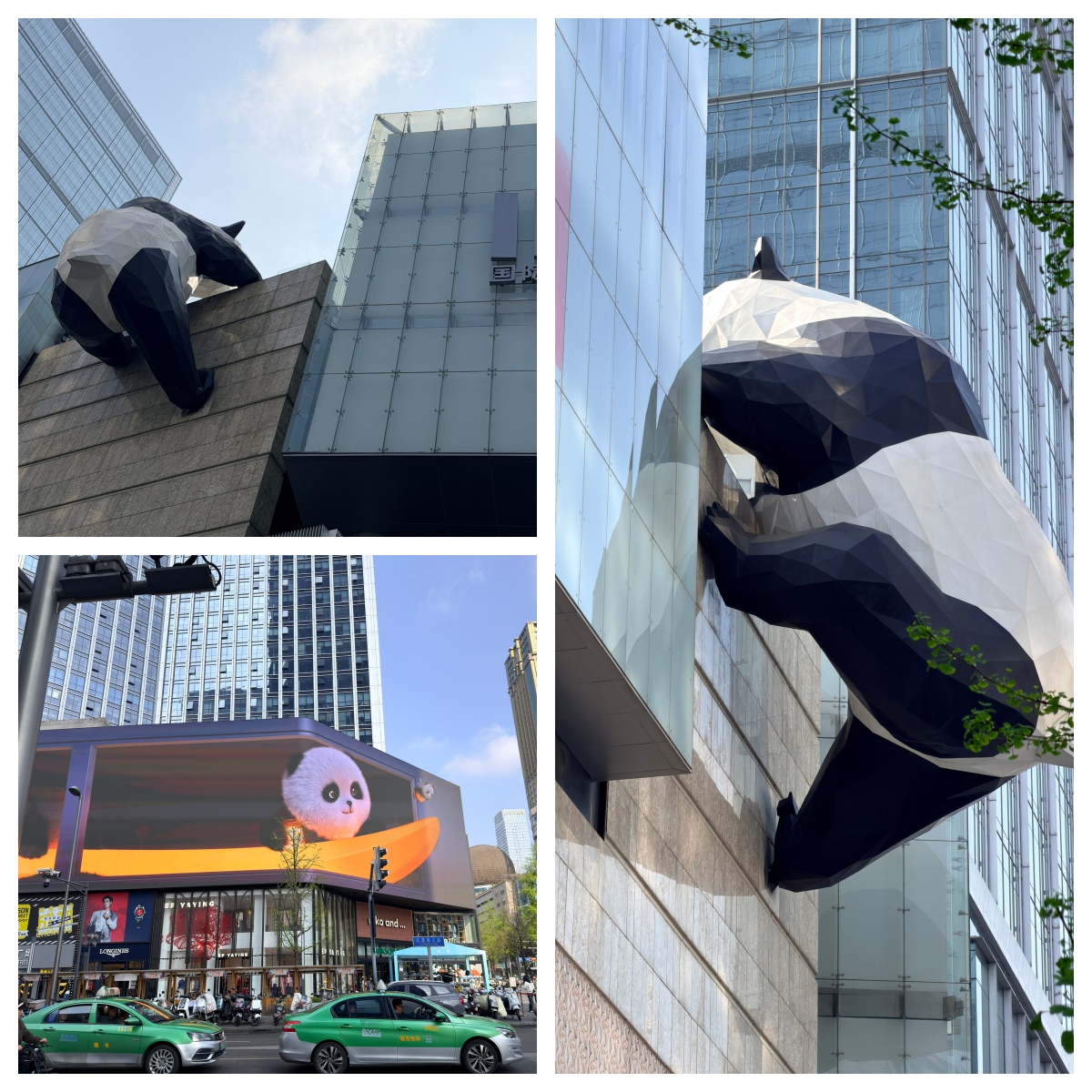
Chengdu IFS sits at No.3 Hongxing Road Section 3, a landmark must -visit site. Its most famous feature is the 15 metre -tall stainless steel giant panda sculpture "I Am Here", leaning out over the building façade as if sliding downwards.
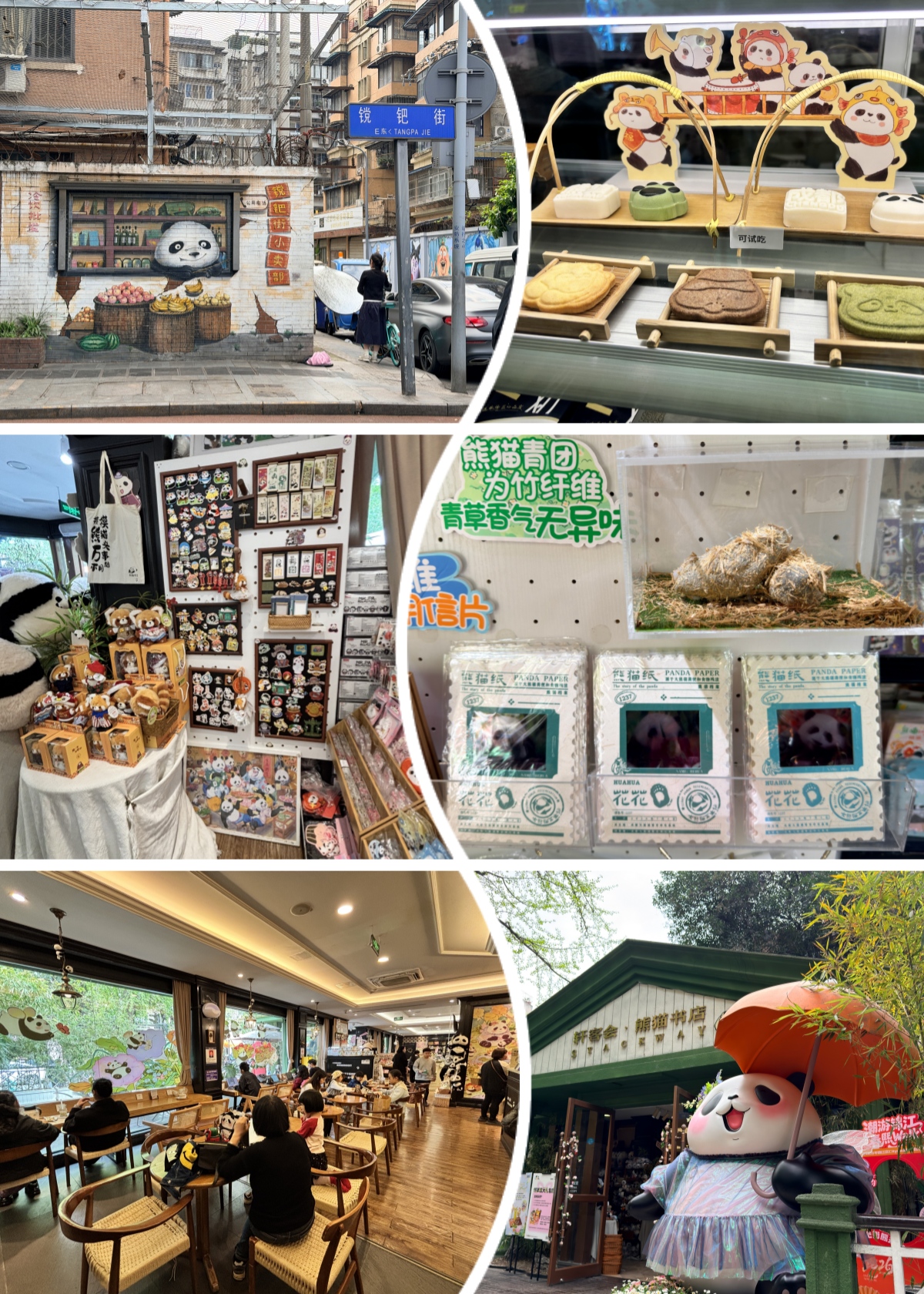
Walking from Chunxi Road toward Tangba Street brings you to Xuanke Hui Panda Bookstore. Everything here is panda themed: books, fridge magnets, stationery and diverse cultural creative souvenirs. A panda sculpture stands by the entrance. I picked up many fun panda themed goods, even discovering postcards made from panda dung. After a full day of sightseeing we drove straight to Guanghan for an overnight stay, aiming for an early morning visit to Sanxingdui Museum.
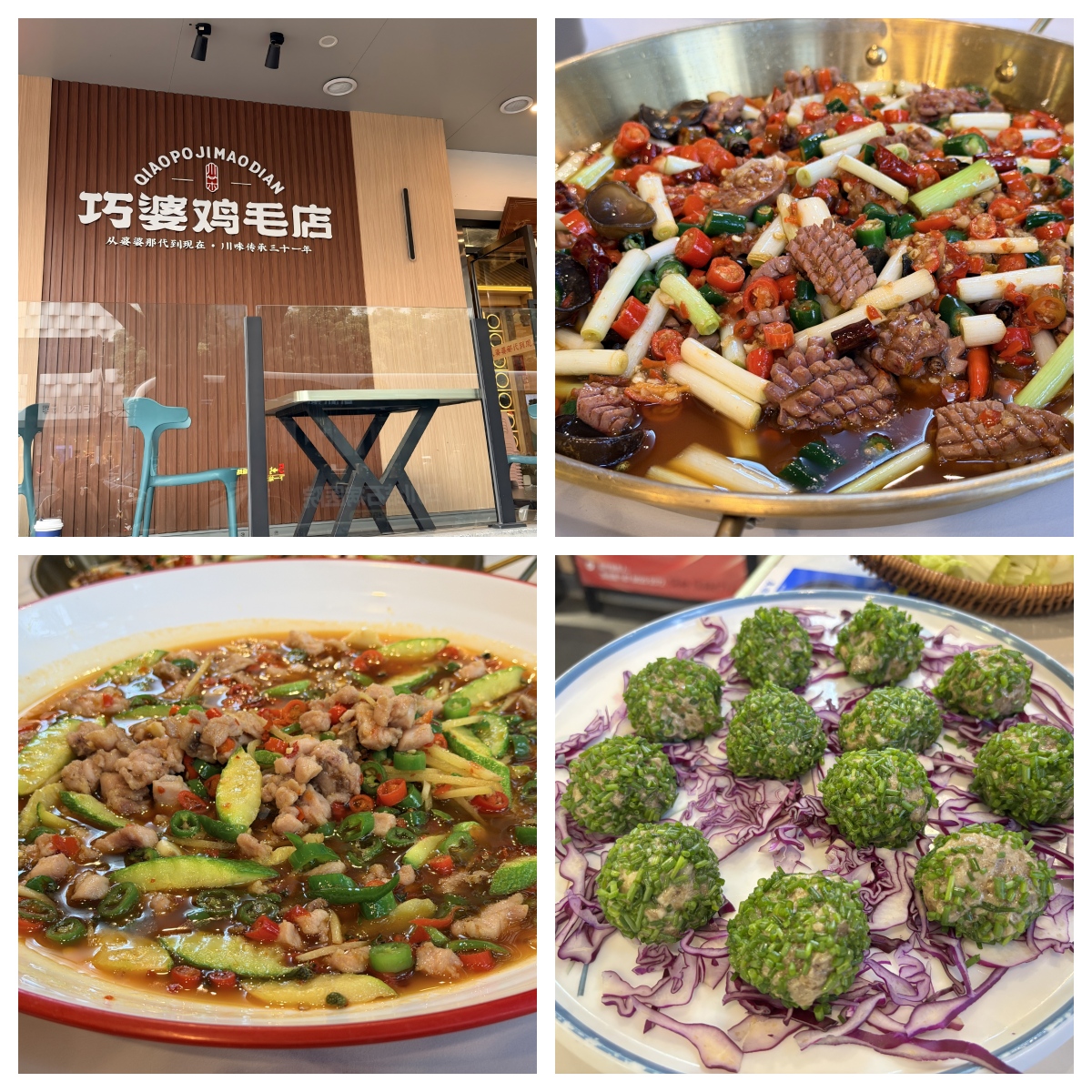
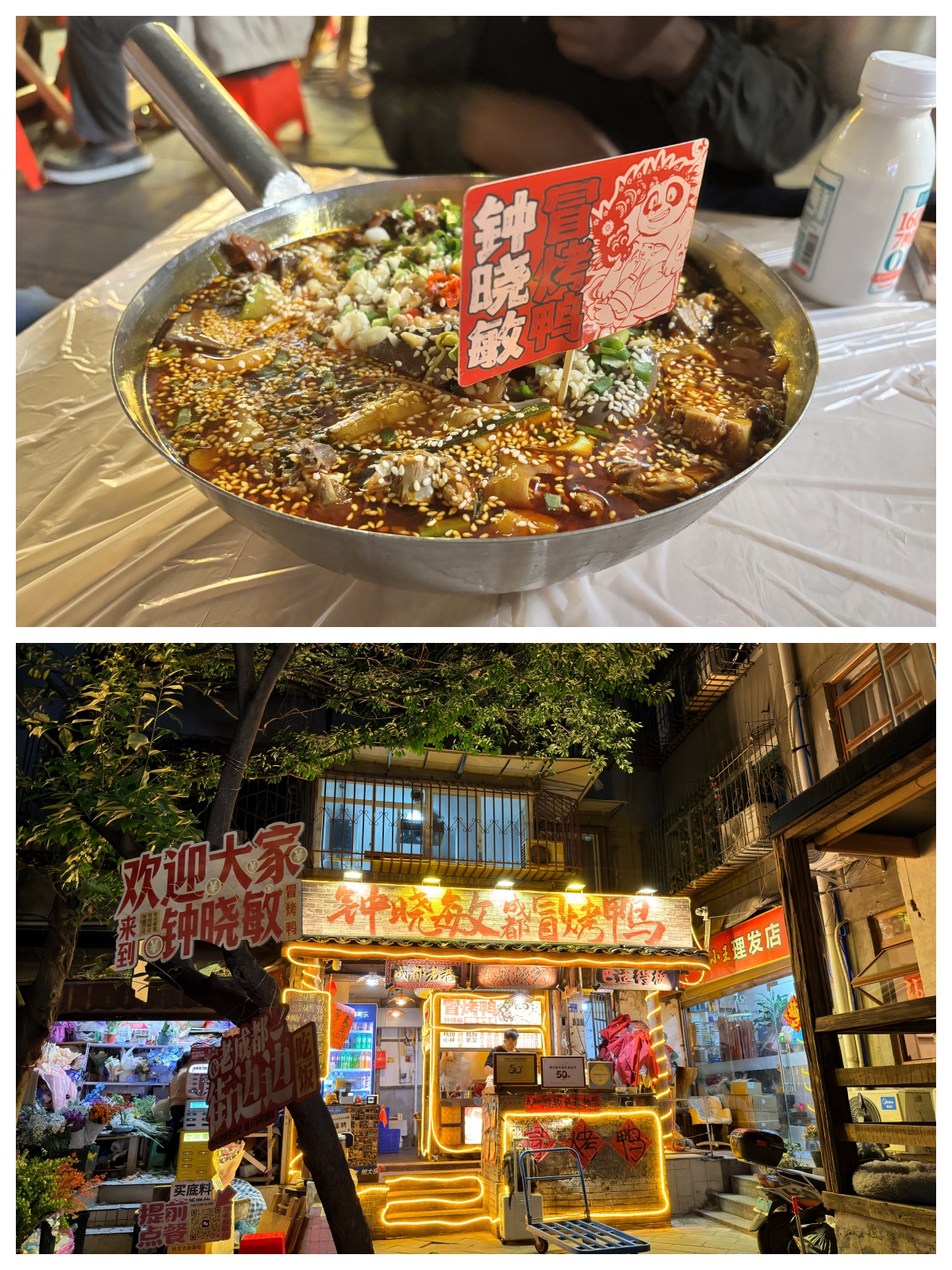
Maocai is a popular Sichuan spicy dish. Various ingredients including vegetables, meat and tofu are blanched in a seasoned spicy broth, then served in the rich soup. It is often described as "individual hot pot".
I set off for the new Sanxingdui Museum at 7:40 a.m. One of my favourite exhibits is the nearly 2.6 metre tall Bronze Standing Figure. Its hands are clasped in front, originally holding some long lost artefact. More than three thousand years later it still stands in silent watch. Rows of bronze human heads bear braided hair, hair pins and gold masks, with protruding eyes and slightly parted lips, as though collectively frozen mid ritual three millennia ago. At the exhibition hall end stands the huge No. 1 Bronze Divine Tree, standing 3.96 metres tall. Divided into three tiers with three branches each (nine branches total), perches hold sacred birds while a bronze dragon descends alongside the trunk. Restorers reassembled it over ten years from 2,479 bronze fragments. This is the museum’s most breathtaking artefact: it does not merely resemble a tree; it is a tree, cast in bronze yet seeming still alive. I lingered long before each exhibit, sincerely marvelling at the ancient craftsmen’s genius.

Next day we travelled onward and spent the night at Huayin below Huashan Mountain. En route we passed rapeseed flower seas in Hanzhong; flowering fields stretched far, and we even spotted crested ibises perching among blossoms. Huashan was not originally on our itinerary. Yet at night the mountain silhouette looms solidly above the town, embodying northern China mountain landscape character.

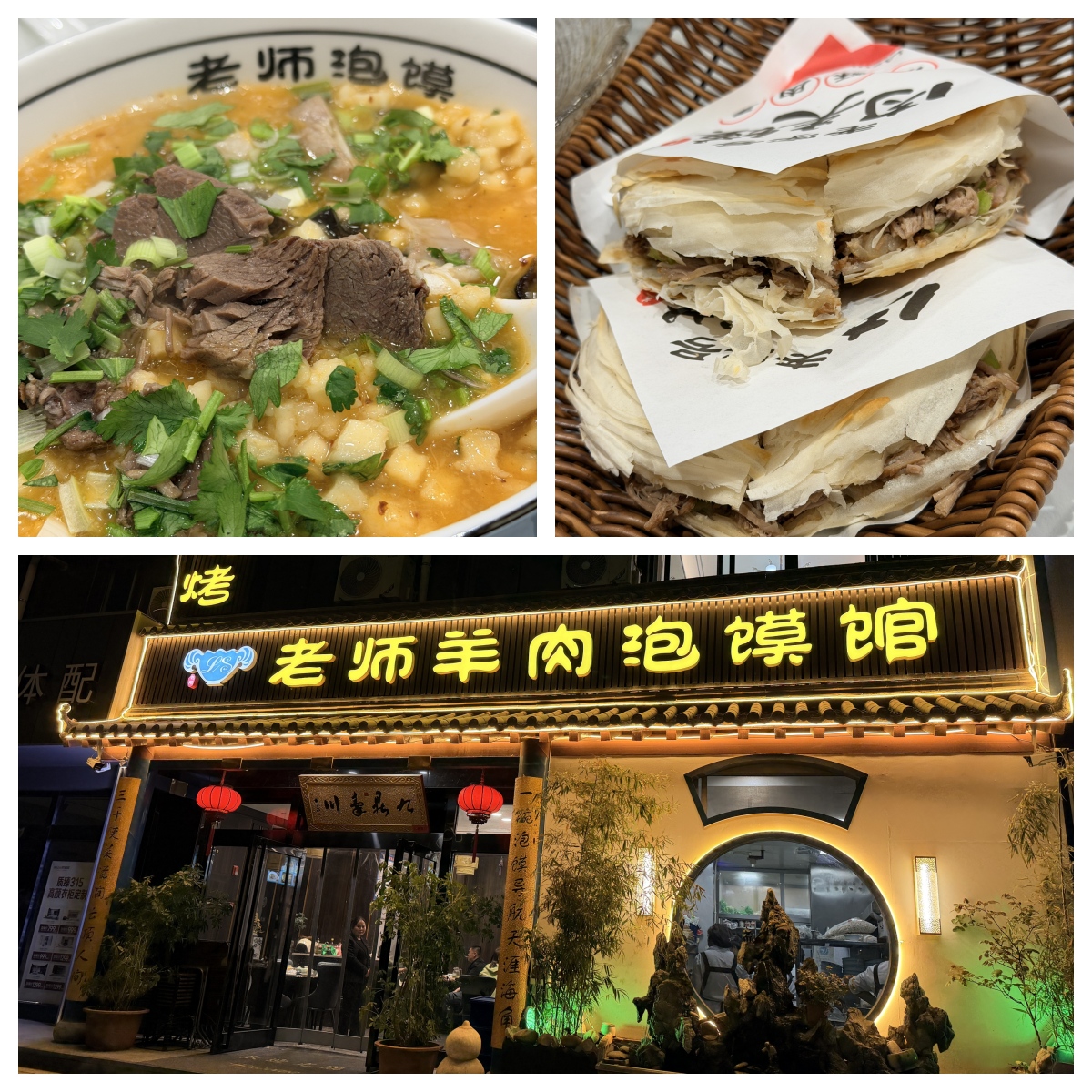
Dinner called for mutton bread soup at a decades -old hidden alley local eatery. You tear your own flat bread pieces, then enjoy slowly simmered soup served steaming hot. One spoonful brings pure northern Chinese comfort.
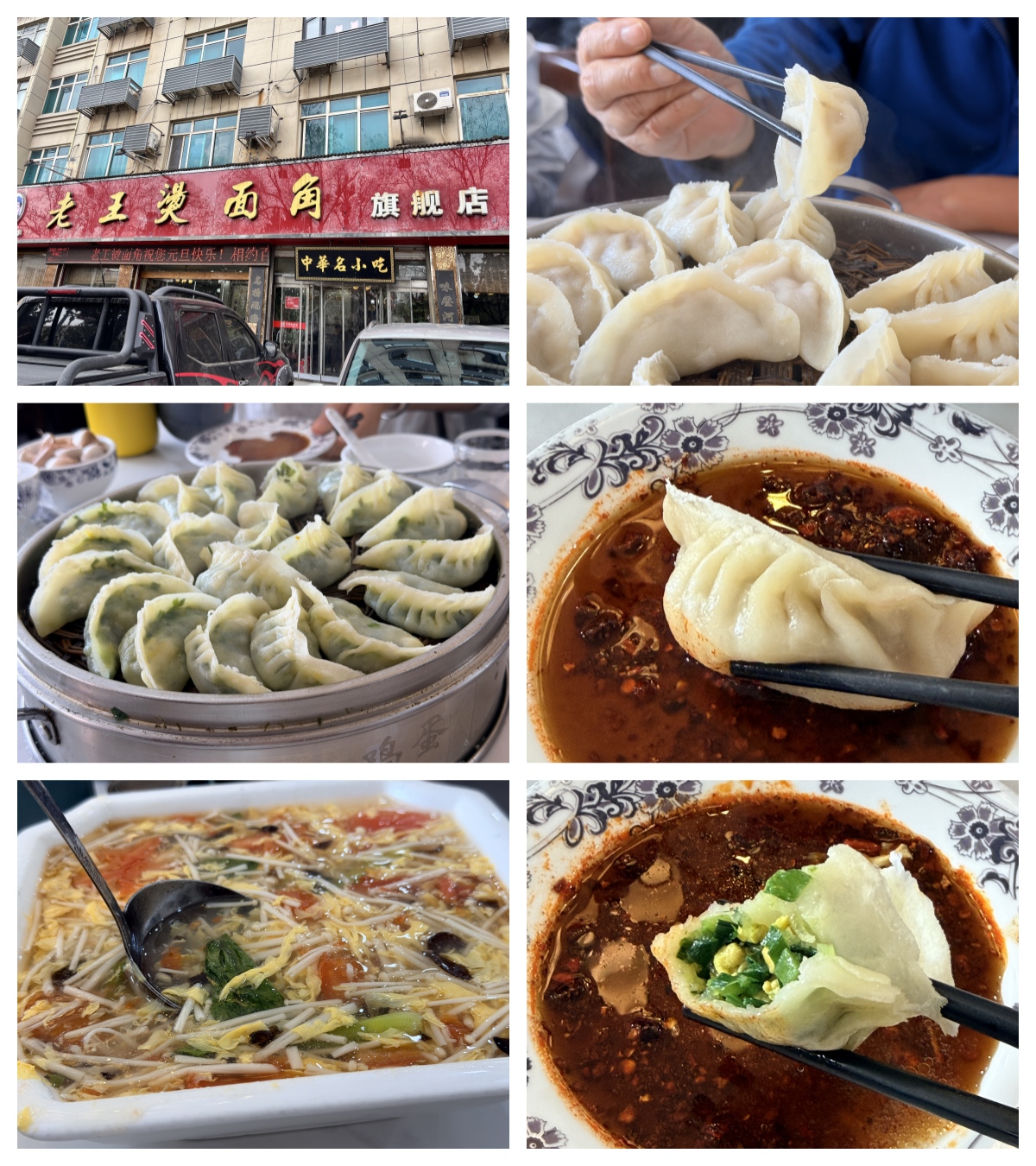
Our eleven- day journey concluded in Luoyang. Tangmianjiao is an old western Henan speciality originating mainly in Xin’an, Luoyang. Dough is kneaded with boiling hot water, rested and rolled into wrappers: thin yet unbreakable, soft but non sticky, retaining texture when cooled — different from ordinary steamed dumplings. Dipped in mature black vinegar, wrappers are thin, fillings juicy, with harmonious leek and pork aroma without greasiness. Eat while hot; cooling makes wrappers tough and dull tasting.
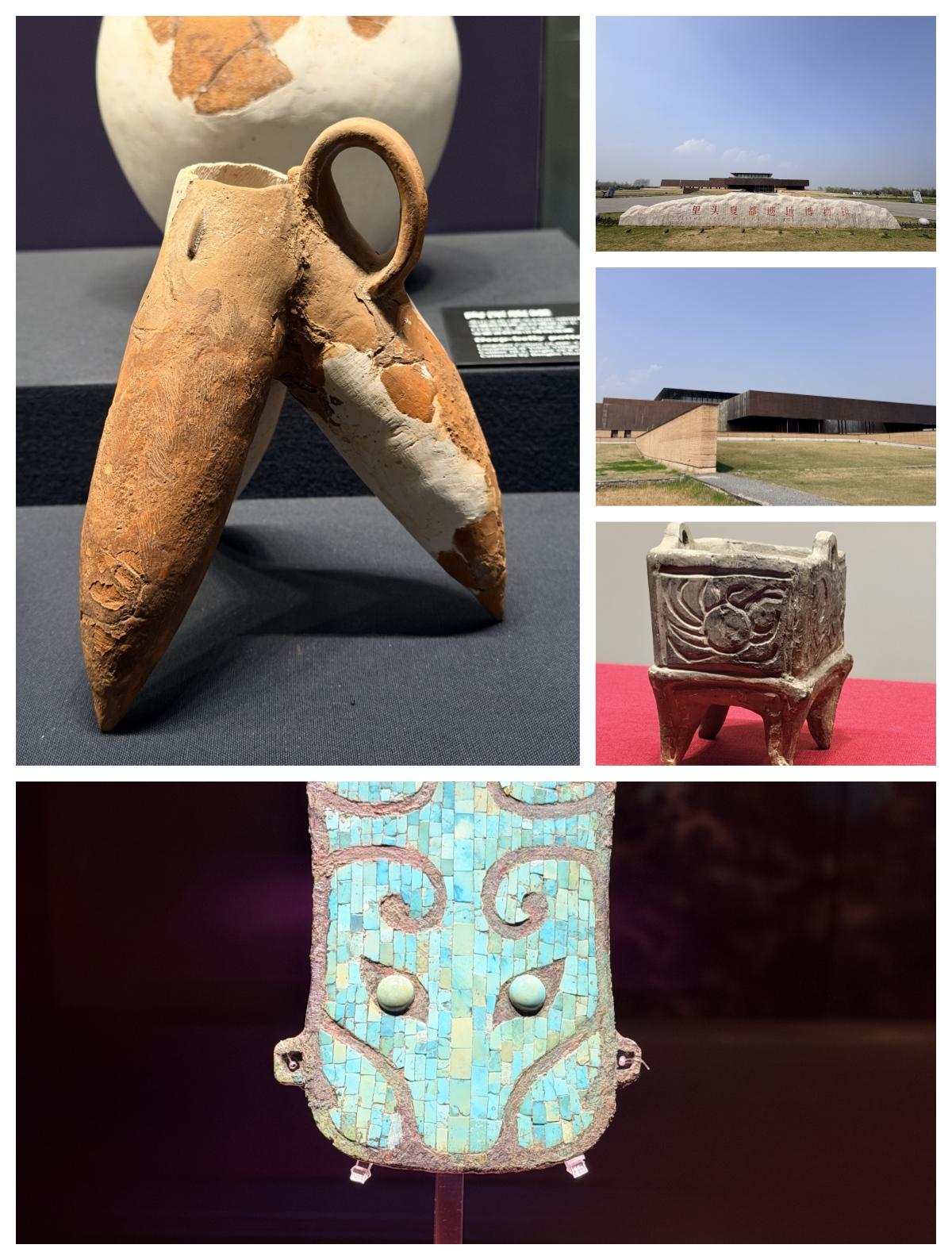
Our final travel highlight turned out to be Erlitou Site Museum. It houses many "China- first" relics, including China’s earliest bronze ritual wine vessel, the bronze jue, plus the spectacular large turquoise dragon artefact, directly named "the Chinese Dragon" by scholars. Here lies direct physical evidence for our nation’s dragon totem. Note that the genuine turquoise dragon artefact is now preserved at the Beijing Archaeological Museum — I was fortunate enough to view it in person in Beijing last year. Unlike Sanxingdui, Erlitou’s bronze artefacts are mostly practical vessels and ritual implements, vividly recreating the capital city life of the mid to late Xia Dynasty. Walking exhibition halls feels like stepping straight into the urban bustle of a capital four thousand years ago.
Our final stop: happy homecoming. This joyful eleven -day journey has been perfectly completed.
Yours Truly
Ann Lv - Charmission Travel








Never miss an update from us. Sign up for our newsletter and stay informed about our latest news, products, and promotions.
2014-2024 © Copyright Charmission, All rights reserved.京ICP备19015279号-2