Jul 23,2026
Most visitors to The Summer Palace never make it past the Long Corridor. They crowd around the Marble Boat, queue for the Tower of Buddhist Incense, and leave convinced that China's most celebrated imperial garden is a beautiful place — but an exhausting one. What if there were a way to experience this UNESCO World Heritage Site almost entirely alone?
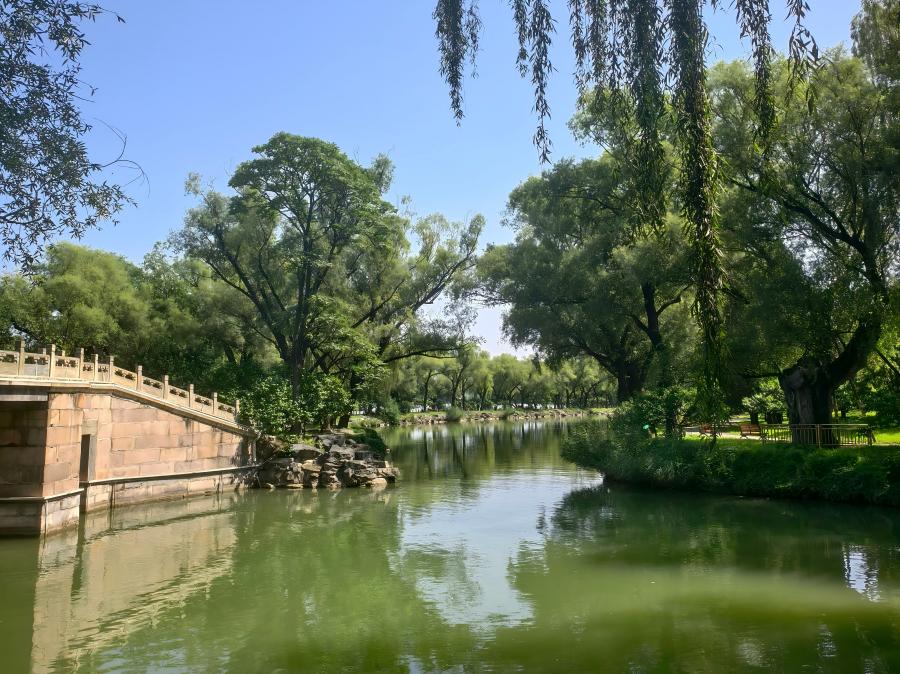
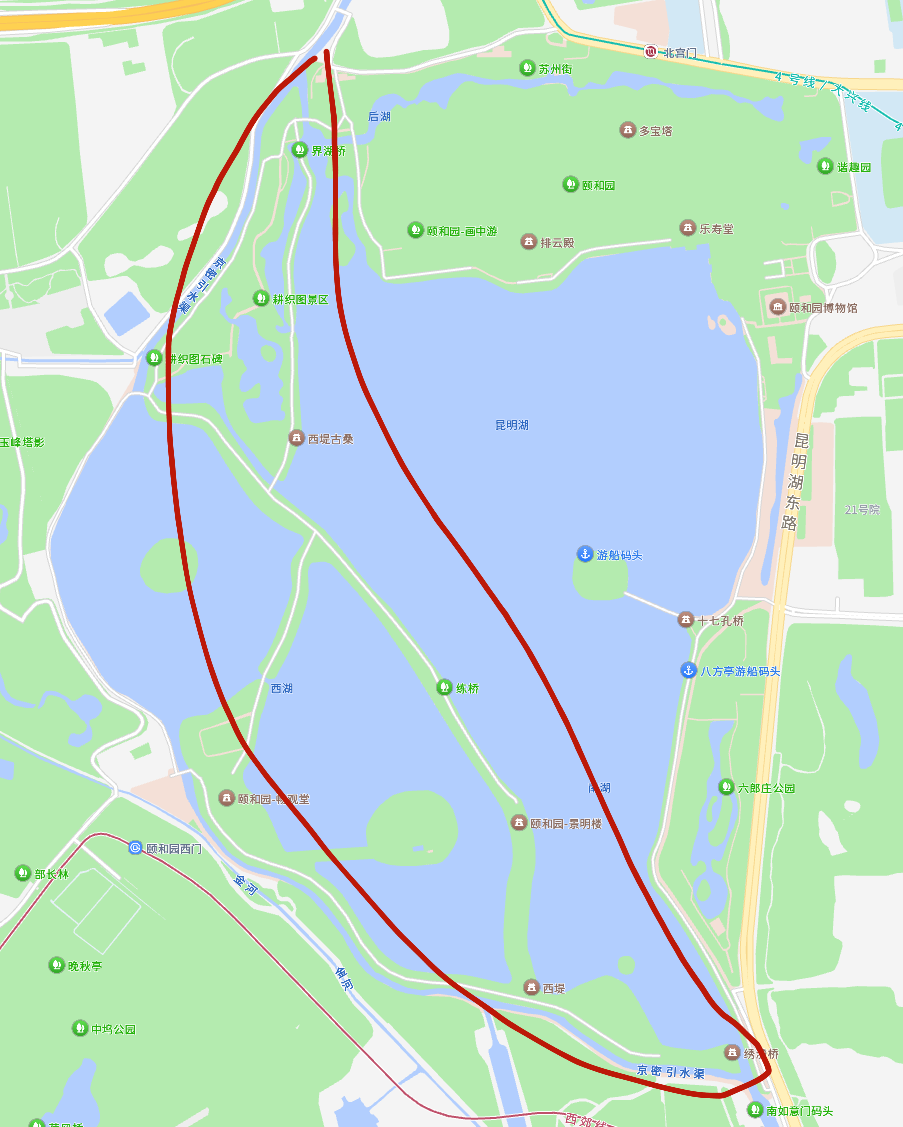
The answer lies on the western shore of Kunming Lake, where a slender causeway stretches southward through willow groves and lotus fields, punctuated by six bridges — each one a small poem in stone. This is the West Causeway (西堤, Xidi), and it is quite simply the most tranquil corner of The Summer Palace. With no must-see ticketed attraction on it, it is not on most tour groups’ itinerary. That is precisely what makes it ideal for the traveler who wants to slow down.
On July 13, 2026, I took my niece to the Summer Palace. My son opted out of the trip, as the weather was sweltering and overly humid. Even though it was peak travel season with soaring temperatures, we ended up having a wonderful day — all thanks to this lesser-known quiet route.
We first headed to nearby Zizhuyuan Park to board the ferry bound for the Summer Palace. The boat ride lasted around 30 minutes, gliding along the Nanchang River and then the Jingmi Diversion Canal, surrounded by lush green scenery on both riverbanks.
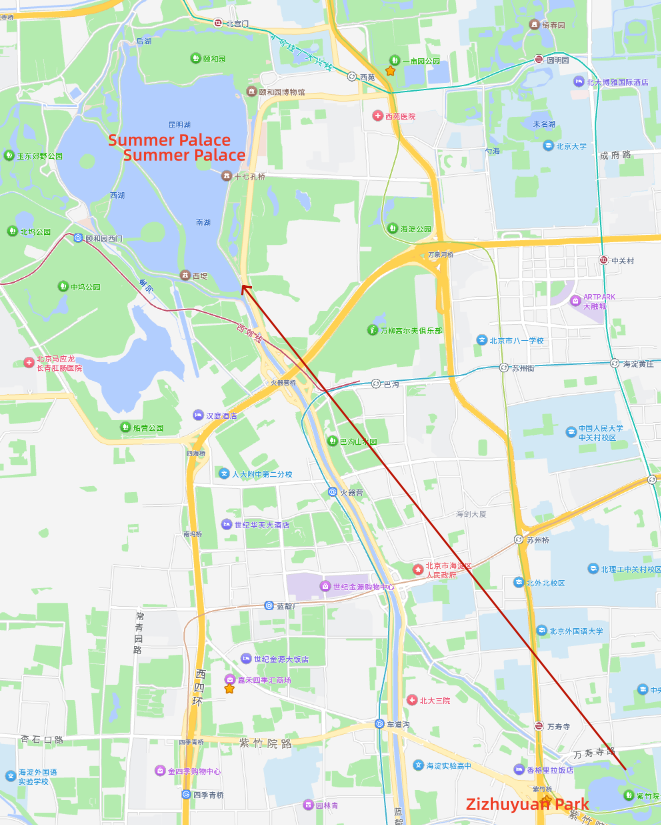
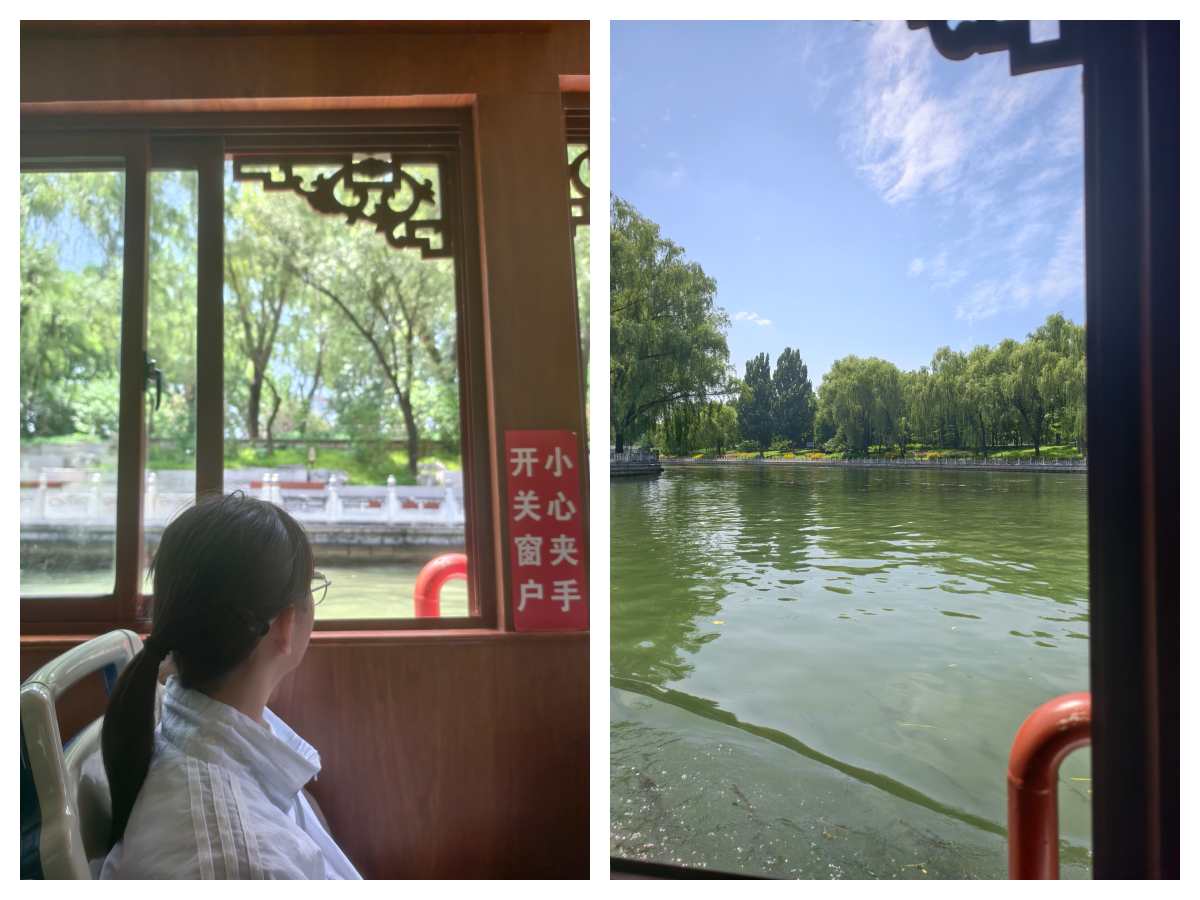
We entered the Summer Palace through the South Ruyi Gate afterwards. Rather than sticking to the crowded eastern shore of Kunming Lake, we chose to wander the West Causeway. We strolled leisurely from its southern tip all the way north, stopping to rest now and then, soaking in the stunning lakeside scenery at a tranquil, unrushed pace.
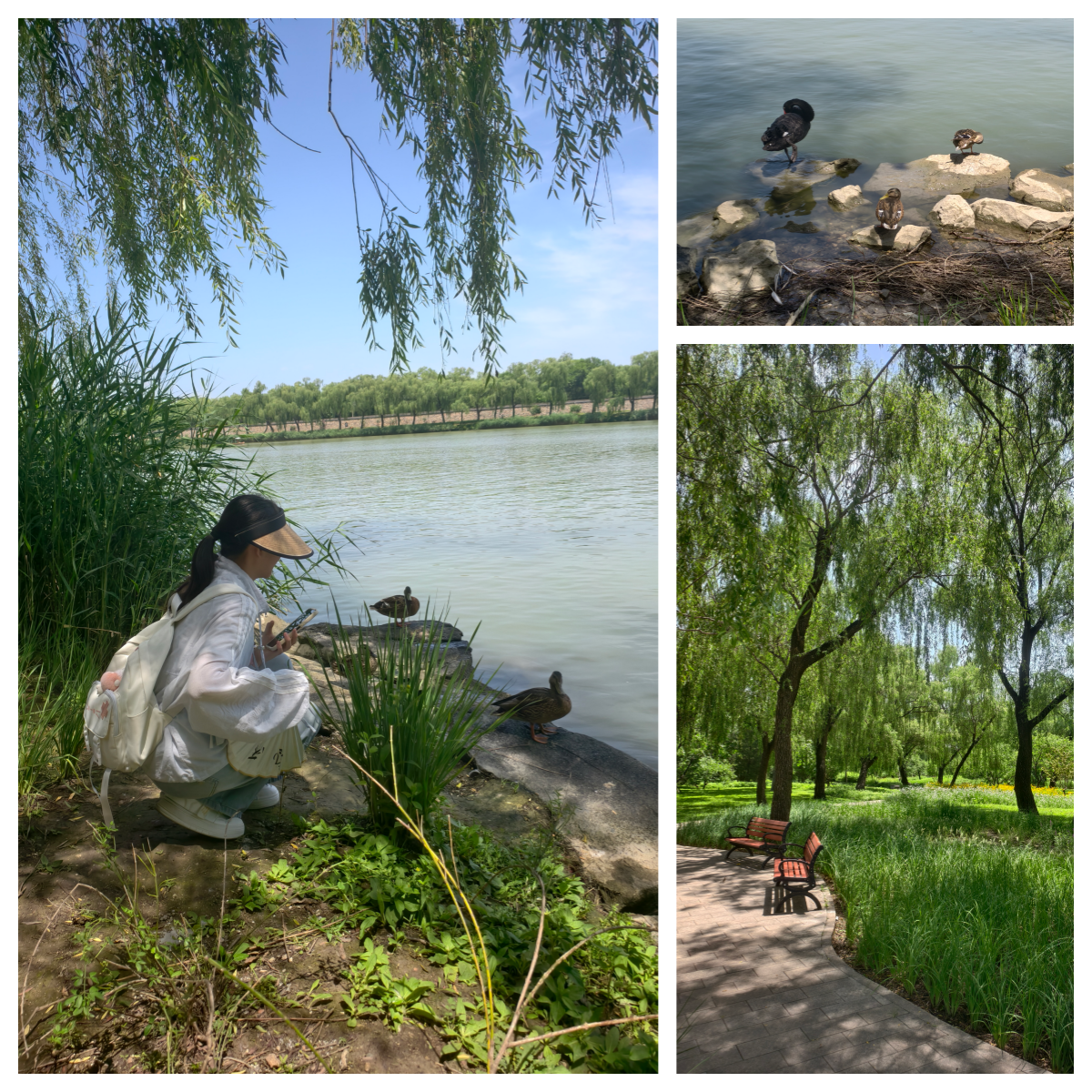
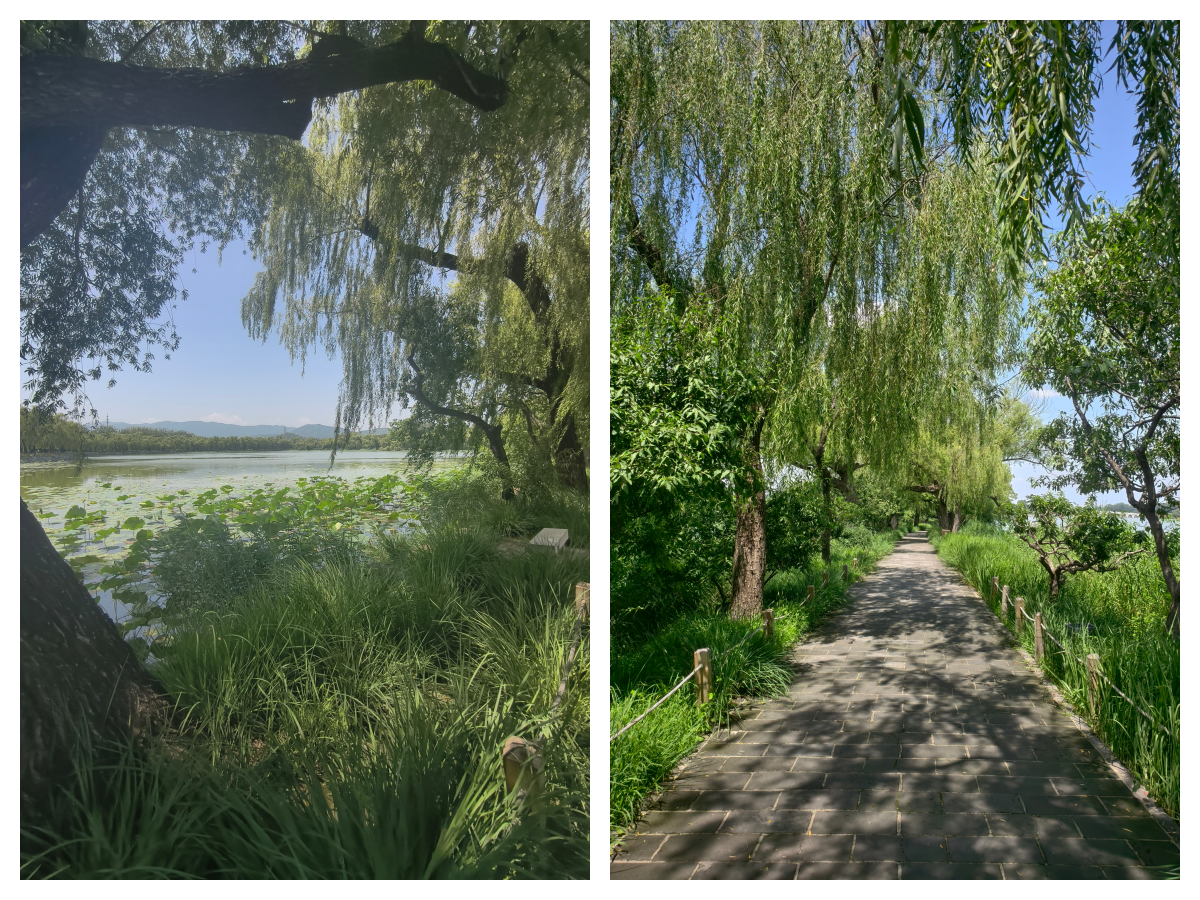
Borrowed Scenery
One of the great principles of Chinese garden design is jiejing (借景) — "borrowing scenery" from beyond the garden's boundaries. The West Causeway is a masterclass in this technique. As you walk, the distant Western Hills (西山) and the pagodas of Jade Spring Hill are drawn into the composition, so that the garden seems to have no edge. Mountains, lake, bridges, and sky merge into a single continuous painting — the very effect Qianlong intended when he designed this place.
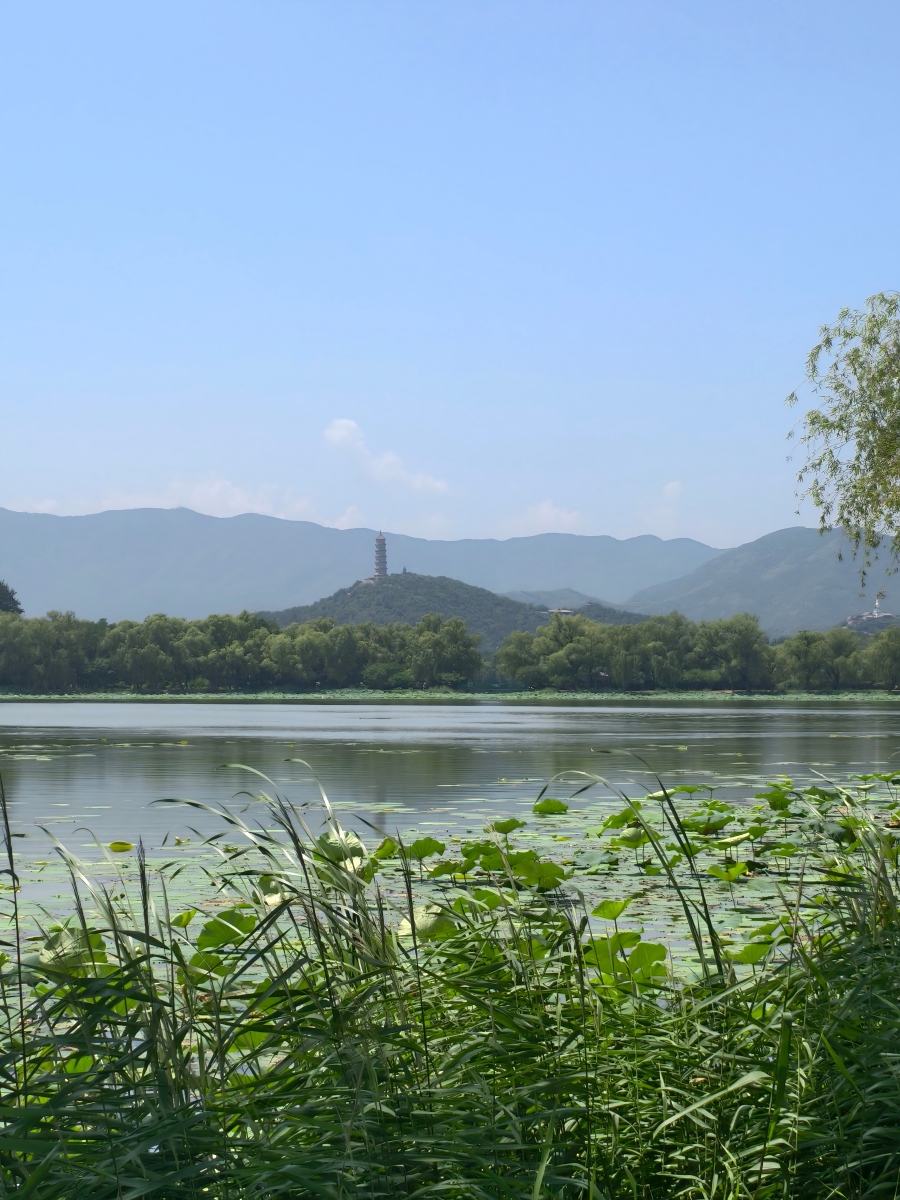
Lotus Fields
In summer (roughly late June through August), the waters west of the causeway erupt into one of Beijing's most spectacular lotus displays — their leaves so dense they nearly cover the lake surface.
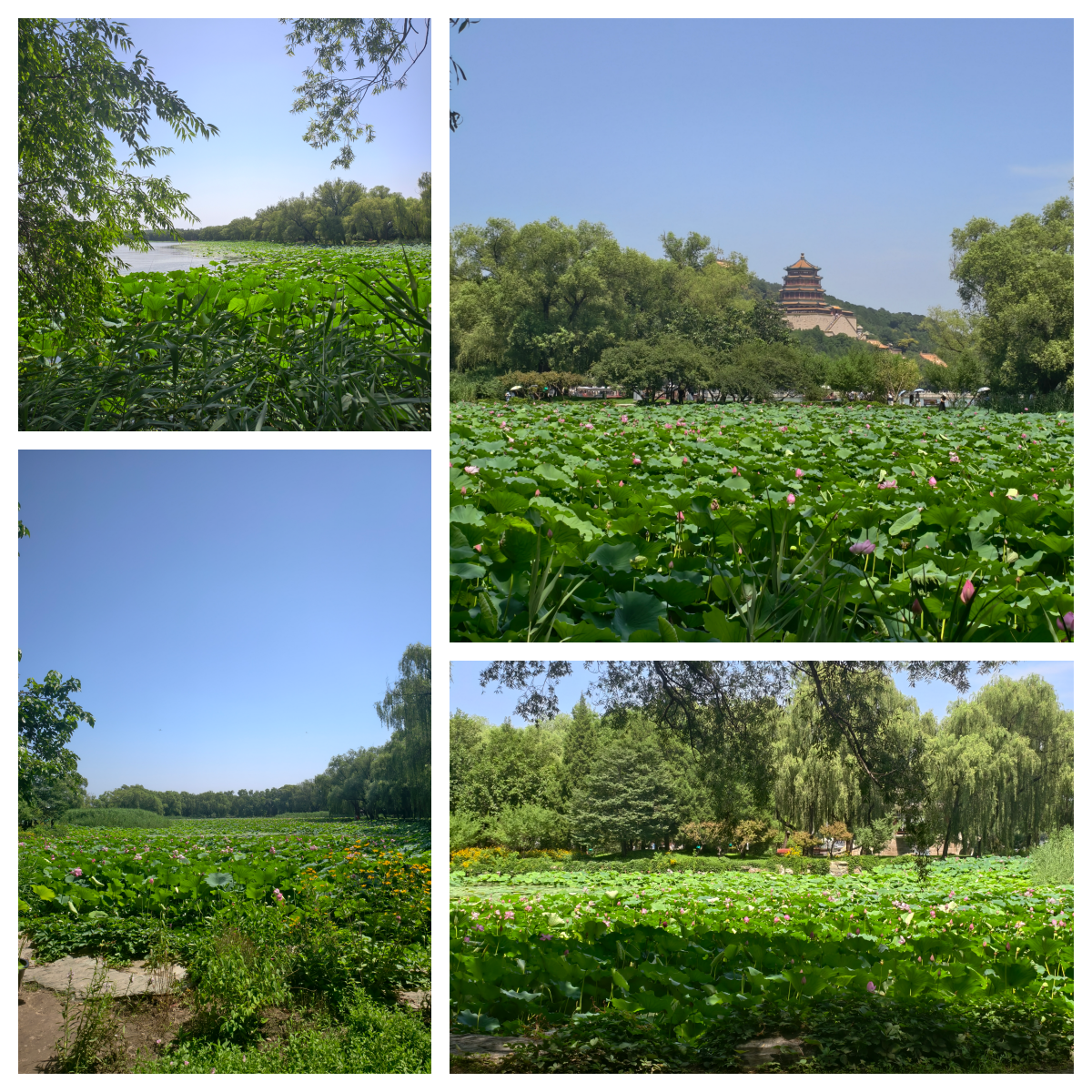
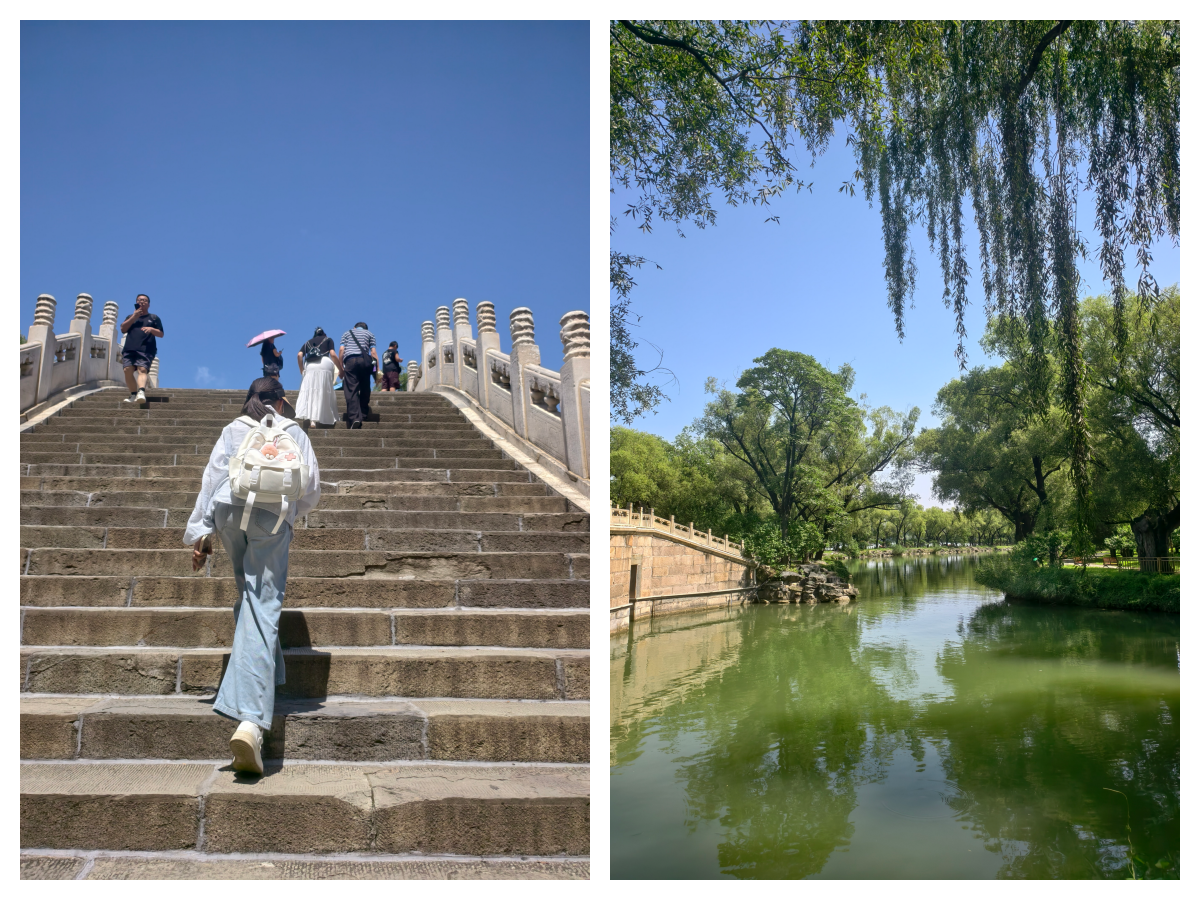
Total walking time along the causeway itself is about 60 to 90 minutes at a leisurely pace, though you could easily spend half a day if you linger at each bridge(we had a nice lunch in a beautiful restaurant along the way). The path is flat and paved throughout — no stairs, no climbing(except some bridges) — making it one of the most accessible routes in the entire palace complex.
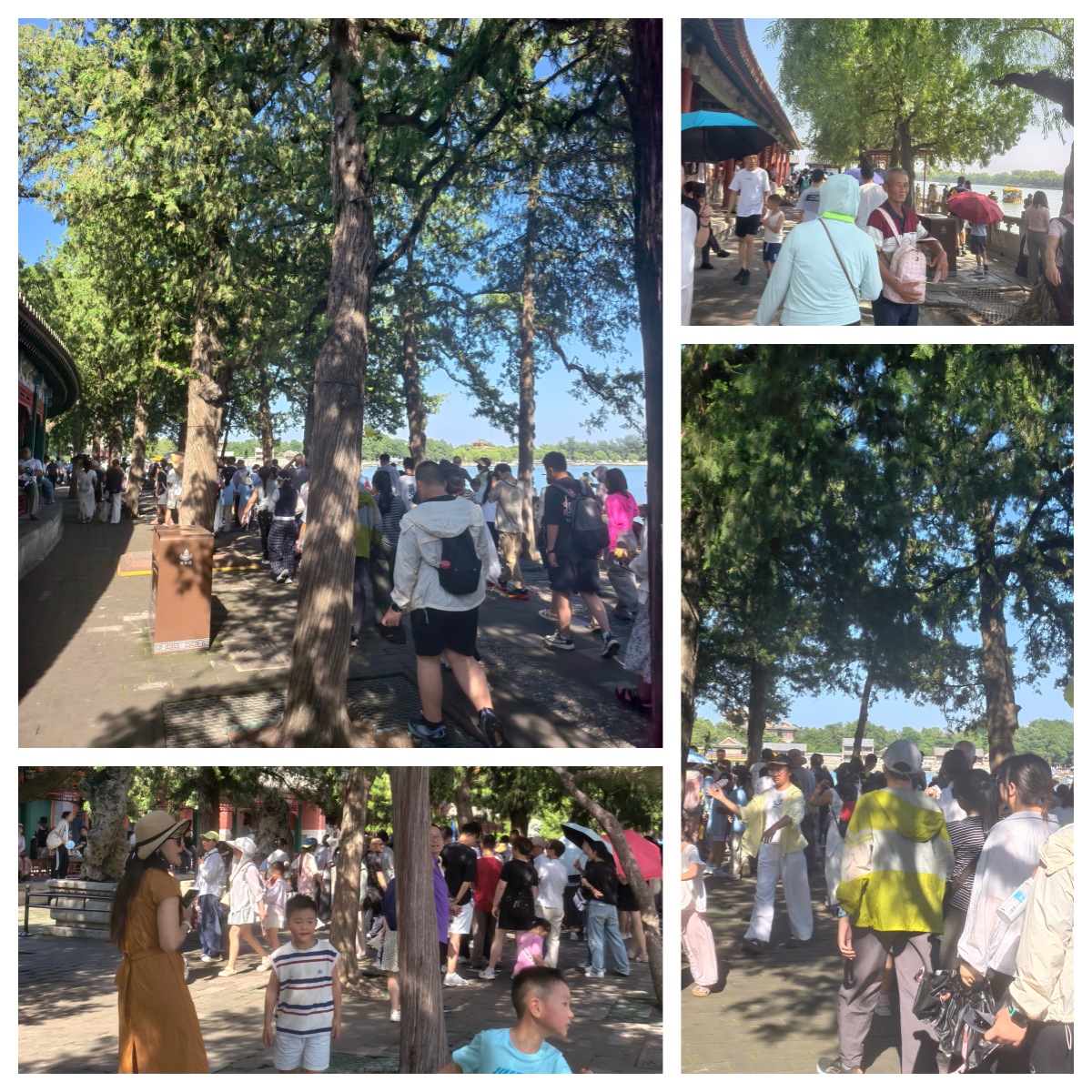
At the northern end of the causeway, we headed east and stepped into the bustling main tourist area. Wow, so many people!
We did stop by the Tower of Buddhist Incense.
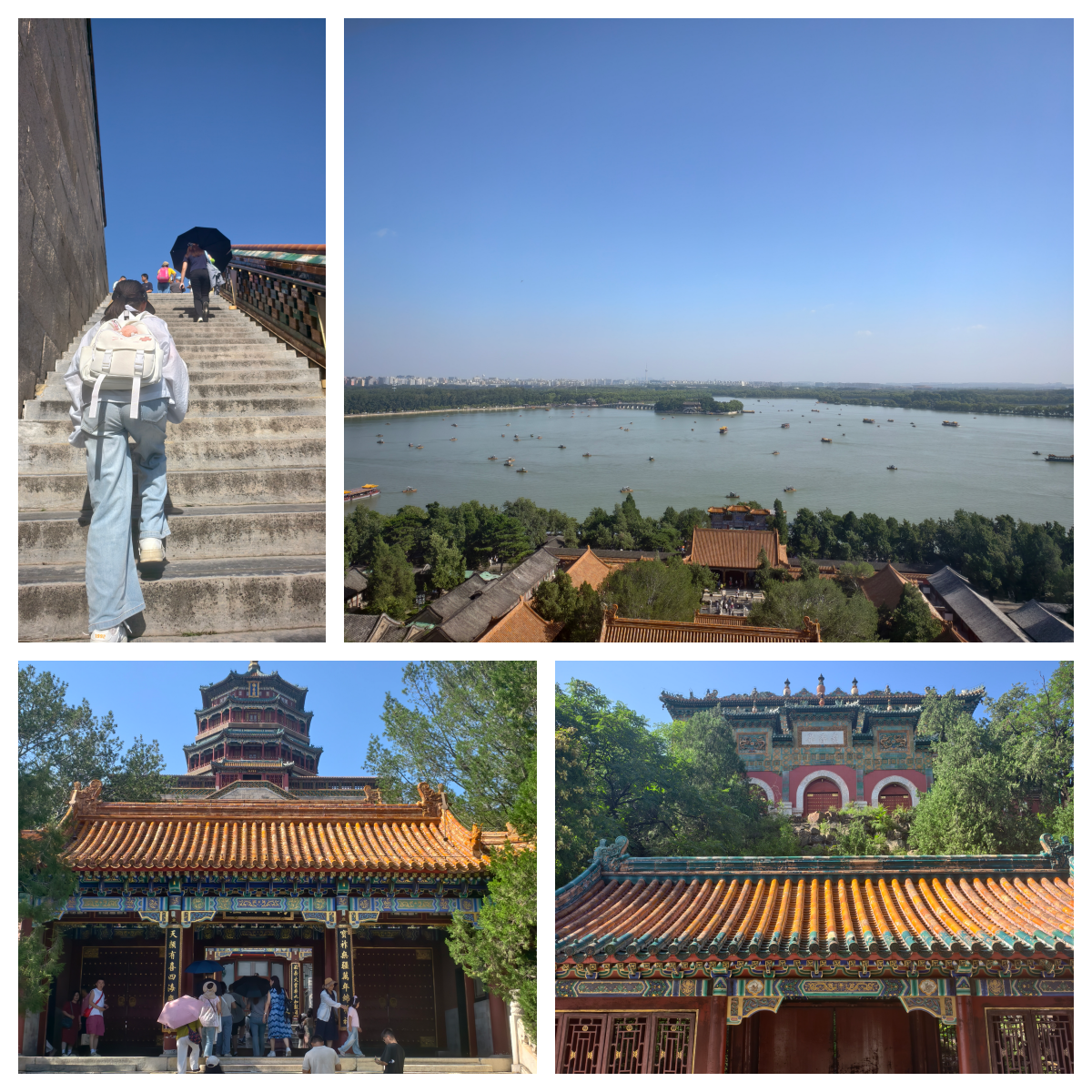
Afterwards, we skipped the remaining popular scenic spots and exited the Summer Palace through the East Palace Gate before heading home by taxi. We left feeling utterly content, with no regrets at all.
The Summer Palace was never meant to be experienced at the pace of a tour group. It was designed as a place to linger — to walk slowly, to pause at a bridge, to watch the light change on the water, to feel a breeze carry the scent of lotus across the lake. The West Causeway is where that original intention still lives.
The Summer Palace has six entrance gates. Below is a quick guide to reaching the causeway from each gate other than the South Ruyi Gate(南如意门).
· Fastest and quietest: West Gate(西门) — five minutes to the causeway, minimal crowds, but limited transit frequency.
· Metro convenience with scenery: North Palace Gate(北宫门) — easy transit, but be prepared for stairs and crowds.
· Full palace experience: East Palace Gate(东宫门) — the longest walk to the causeway, but you pass through every major landmark en route.
· Hidden southern entry: New Palace Gate(新建宫门) — no metro, but a peaceful, crowd-free approach from the south that lets you walk against the flow of traffic.
· The insider's choice: North Ruyi Gate(北如意门) — a flat, fast route to the causeway's north end, rewarding those willing to walk an extra kilometer from the metro with near-solitude.
Yours Truly
Angie Guo - Charmission Travel








Never miss an update from us. Sign up for our newsletter and stay informed about our latest news, products, and promotions.
2014-2024 © Copyright Charmission, All rights reserved.京ICP备19015279号-2