Dec 15,2025
Every bronze vessel whispers, every bowl of saozimian(sour and spicy noodles) tells a story—this small city holds the earliest "China." During the National Day holiday, seeking to avoid the crowds, I chose this northern town known as the "Hometown of Bronze Ware." Just three hours west by high-speed rail from Zhengzhou, I arrived in this city steeped in time. Free from the hustle and bustle of metropolises, it carries the weight of three thousand years of history—Baoji, a place whose very name exudes an ancient charm. Titles like "Hometown of Bronze Ware," "Birthplace of Zhou and Qin Civilizations," and "Sacred Land of Buddhist Relics" barely scratch the surface of its richness.
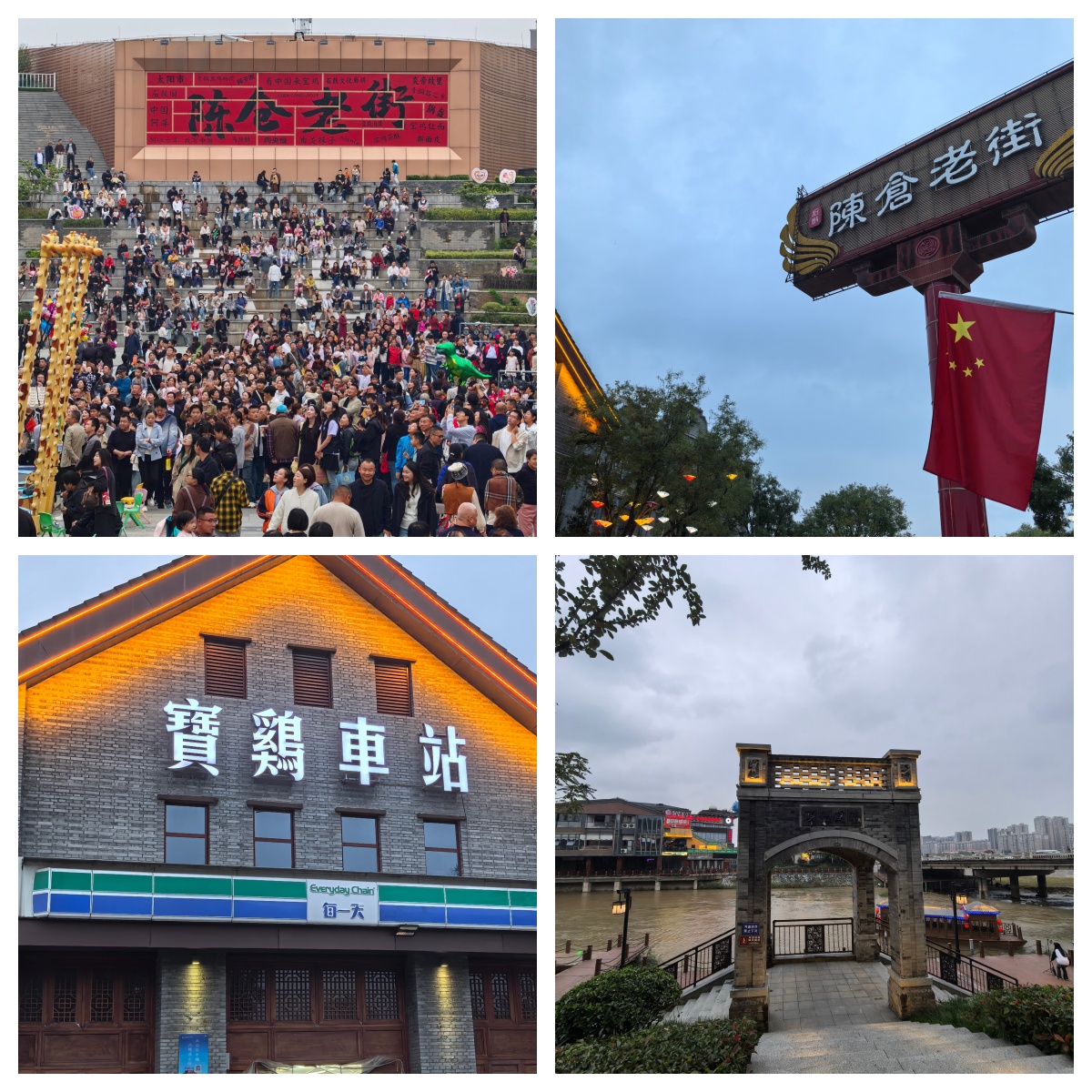
The moment my feet touched the bluestone pavement of Chencang Old Street(陈仓老街), I felt as though I had stepped into an echo of history. Built during the Tang Dynasty, this street was once a vital thoroughfare connecting the Qin hinterland with the Wei River basin. Today, it has been meticulously restored to its 1941 appearance. An old steam locomotive stands silently, faded posters of the People’s Cinema flutter in the wind, and shop signs from the Republican era sway gently.
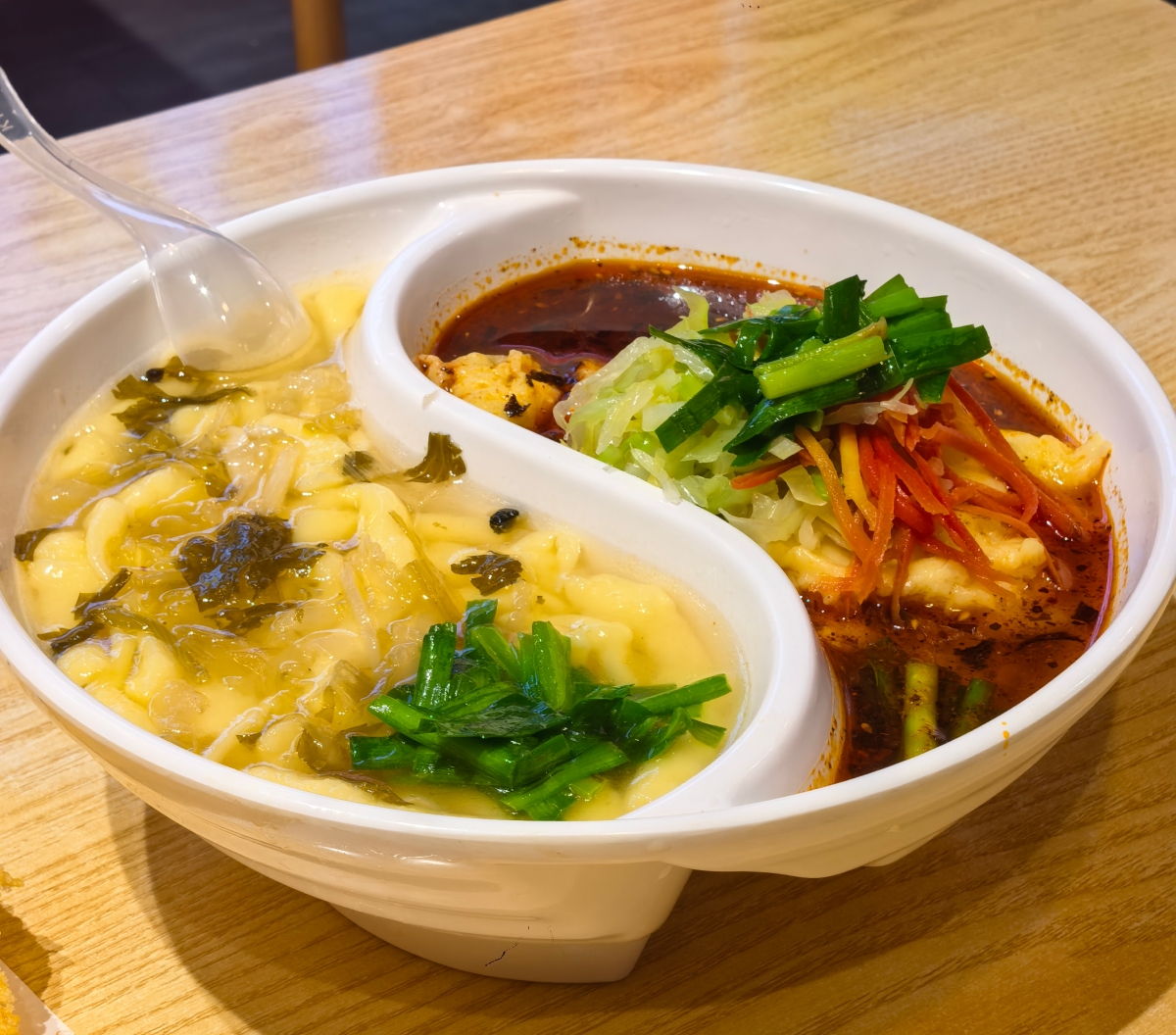
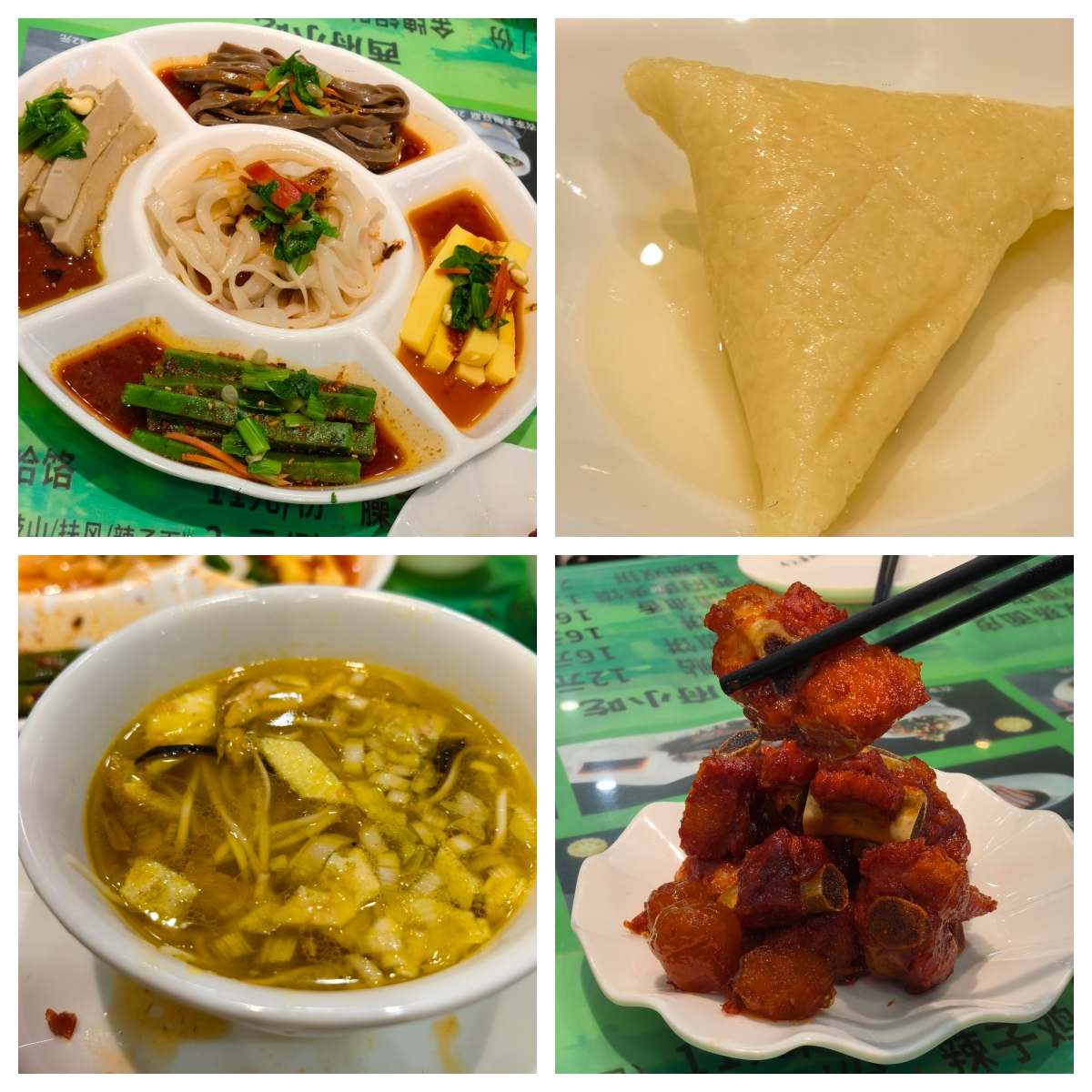
The aroma of dinner led me to Qinren Jiaotuan(秦人搅团Qin People’s Stir-Fried Porridge). Their signature dish, "Shui Weicheng"(水围城) , features golden porridge encircled by savory sauce, resembling a miniature city surrounded by water. The texture is smooth, and the aroma of oil is intoxicating. The hospitable staff recommended a combo of stir-fried porridge and jiangshui yuyu(浆水鱼鱼sour soup fish noodles), allowing me to sample two classic West-Fu (Shaanxi’s western region) delicacies in one go—a culinary dialogue between tradition and modernity.
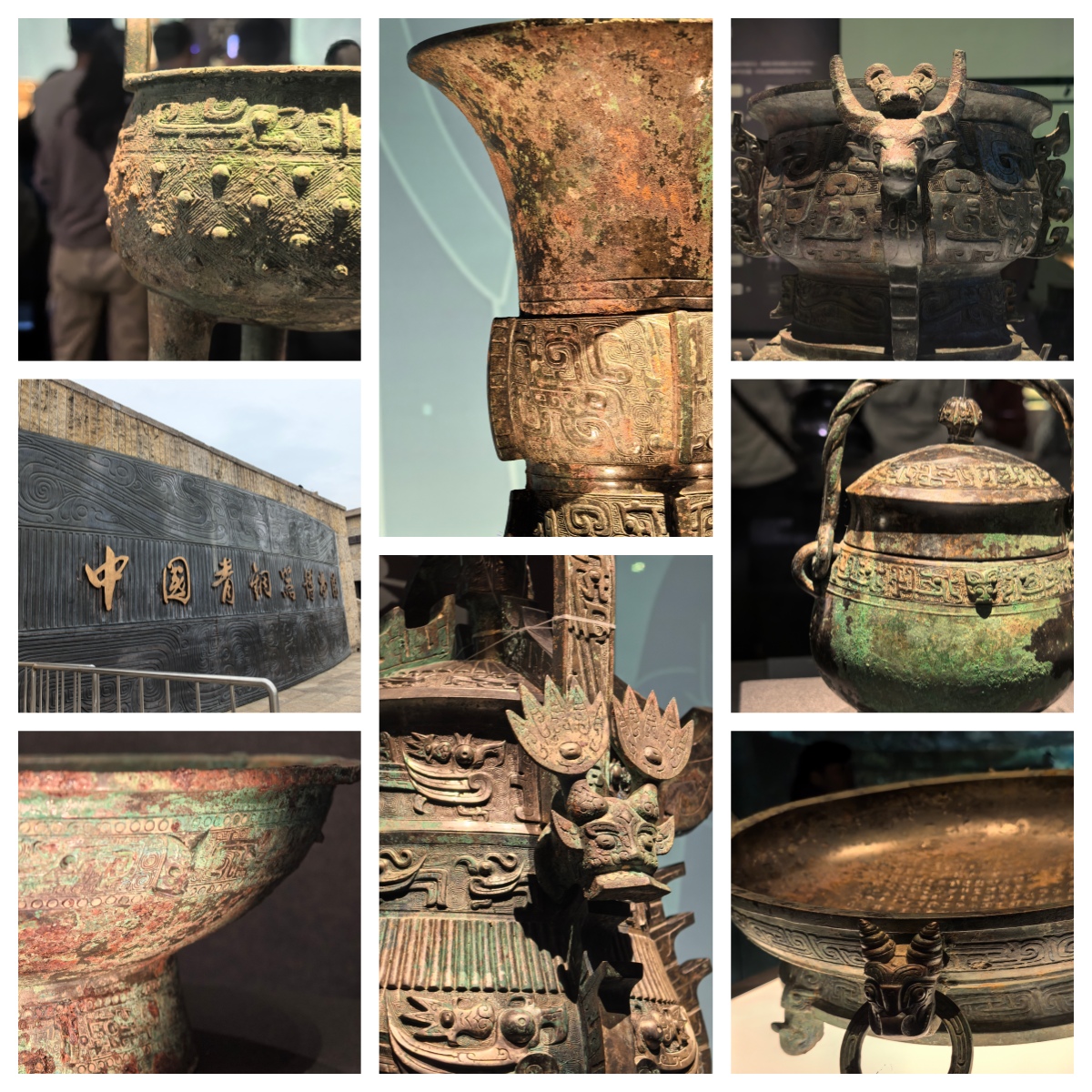
In the morning, I visited the Baoji Bronze Ware Museum(宝鸡青铜器博物院), China’s largest and only museum dedicated exclusively to bronze artifacts. Its unique architectural design, shaped like a "platform with five tripods," silently narrates the profound significance of the Western Zhou Dynasty’s ritual vessel system. The museum’s most treasured exhibit is the He Zun, an early Western Zhou bronze wine vessel inscribed with 122 characters on its base—including the earliest written record of the word "Zhongguo"(China). Following the guide’s explanations, I could almost hear the echoes of the Bronze Age and envision the ancients creating civilization on this land.
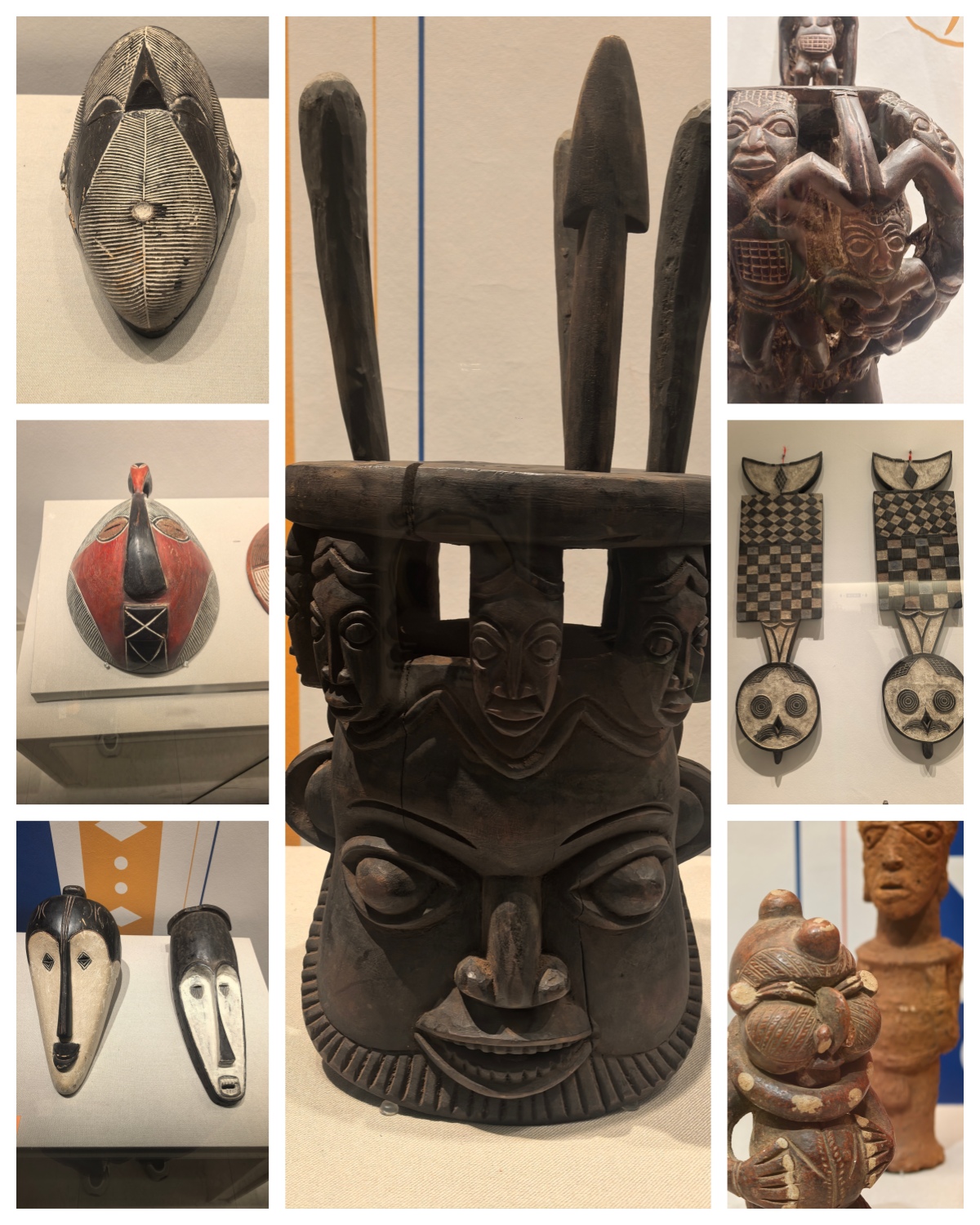
I was also fortunate to encounter an African art special exhibition, where the raw, primal aesthetic of the pieces contrasted sharply with the refined beauty of the bronze ware, showcasing the diverse expressions of human civilization.
For lunch, I dined at Ling Shi Jia Wai Jia Zhou-Qin Shifu Restaurant (令氏家外家周秦食府), a culmination of Baoji’s street food culture. Meizi paigu(梅子排骨plum-flavored spareribs) wafted with fragrance, while Qishan saozimian(岐山臊子面Qishan-style sour and spicy noodles) were tangy, spicy, and irresistibly chewy. Each dish seemed to tell the story of an ordinary family’s daily life in West-Fu—simple yet deeply meaningful.
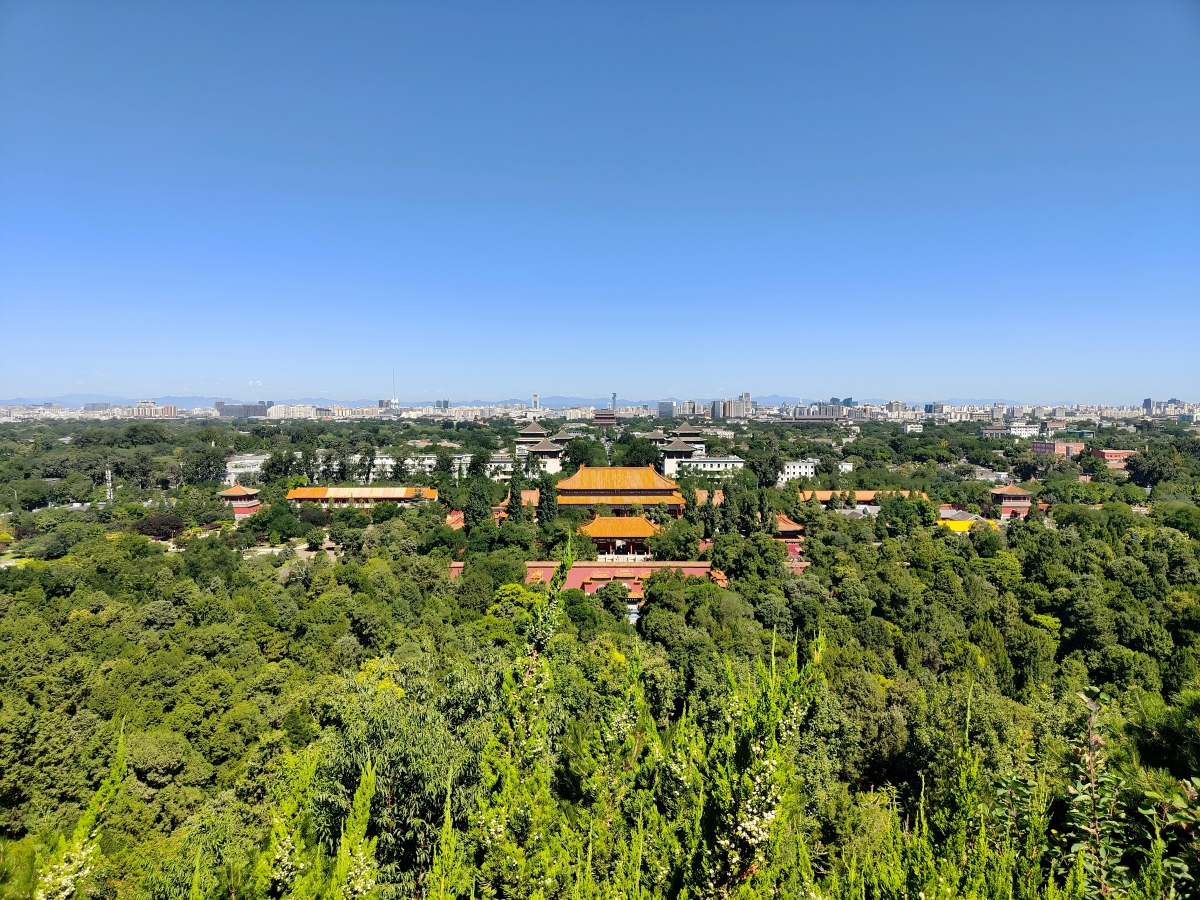
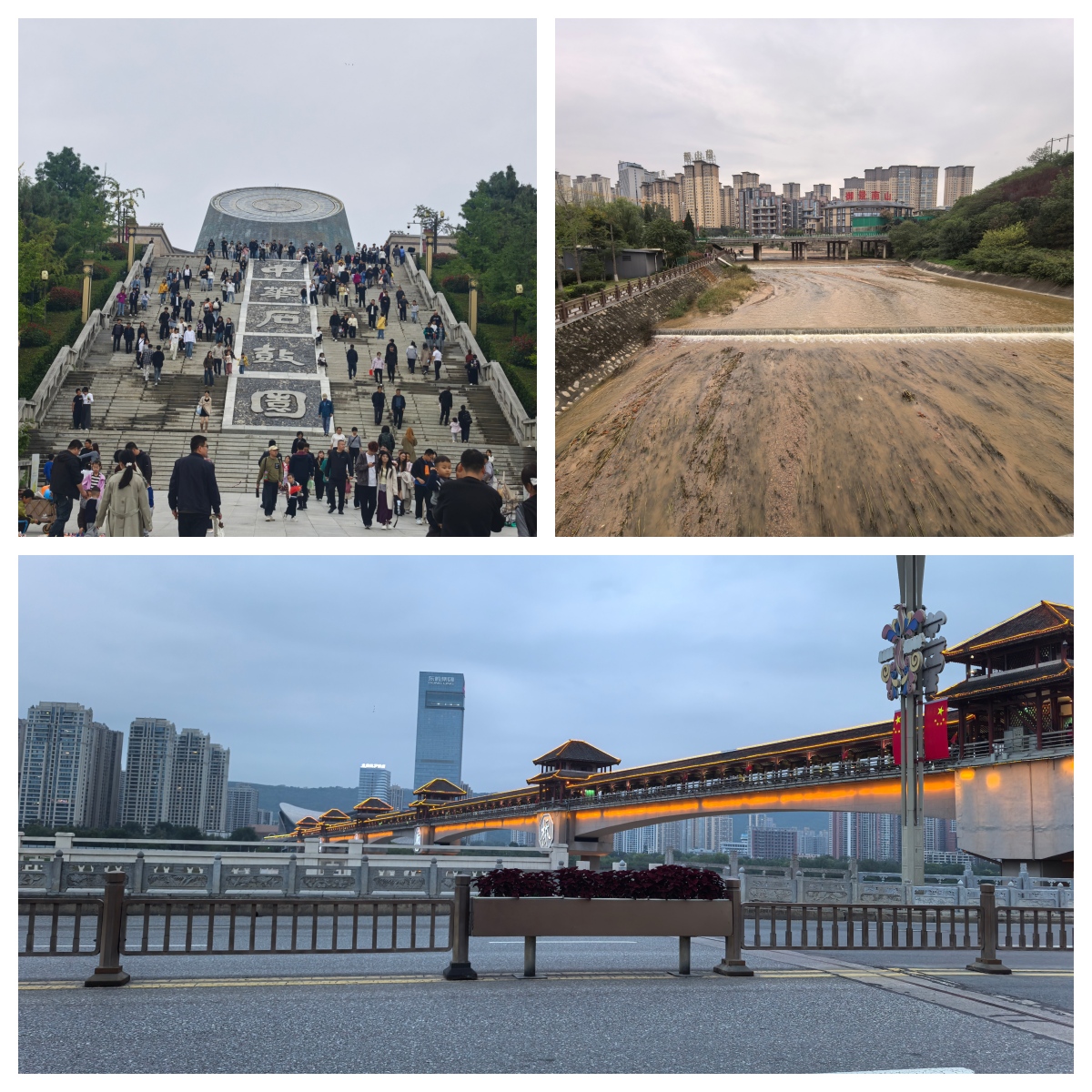
In the afternoon, I climbed the Chen Cang Stone Drum Pavilion in Zhonghua Stone Drum Park(中华石鼓园), where the entire city of Baoji unfolded beneath me. The Qinling Mountains stretched endlessly, the Wei River meandered gracefully, and the modern city blended seamlessly with the ancient land.
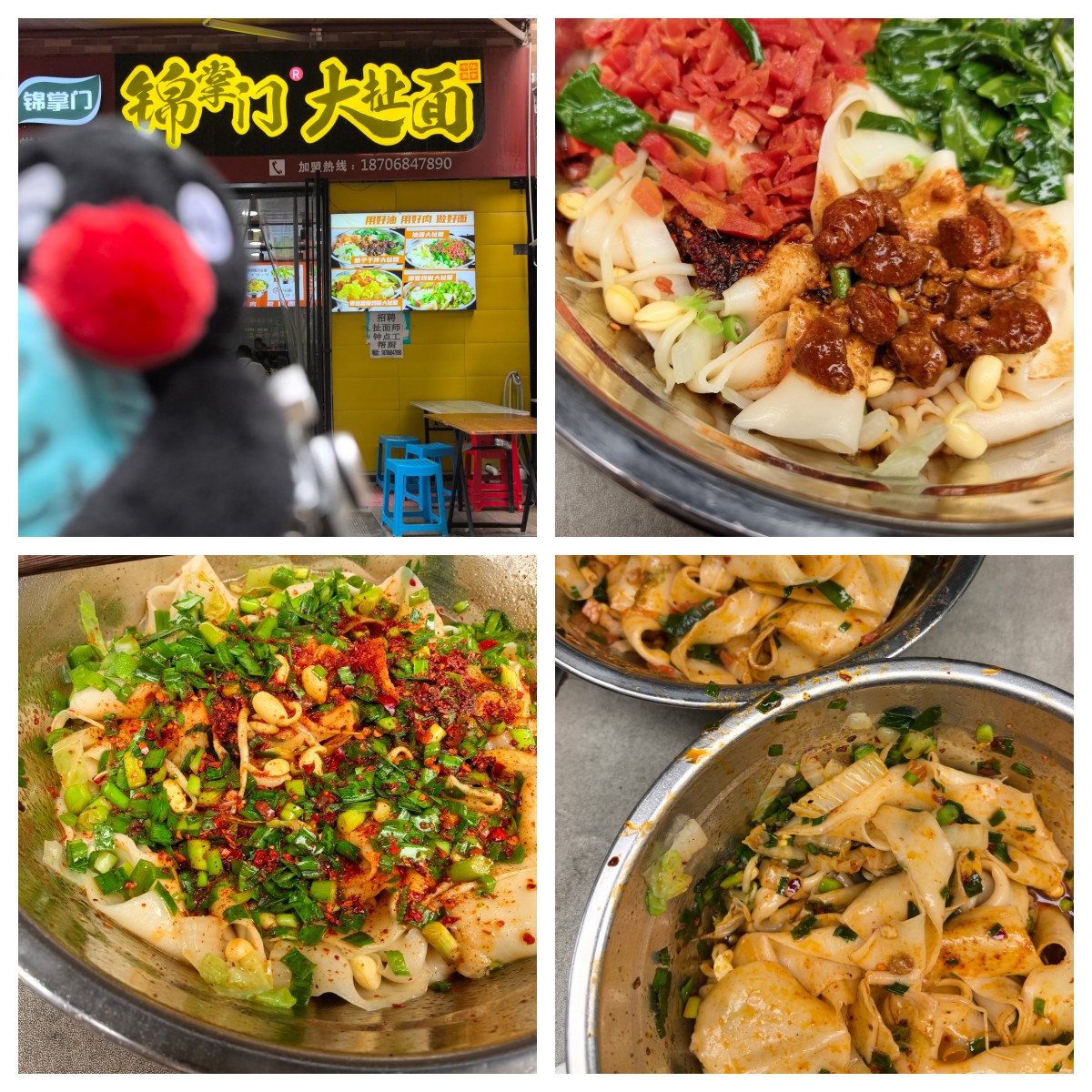
That evening, I savored another Baoji specialty: da chemian(大扯面wide hand-pulled noodles). The thick, springy noodles, paired with the tangy-sweet flavor of aged vinegar and the fragrant kick of chili oil, won over even my usually noodle-averse palate.
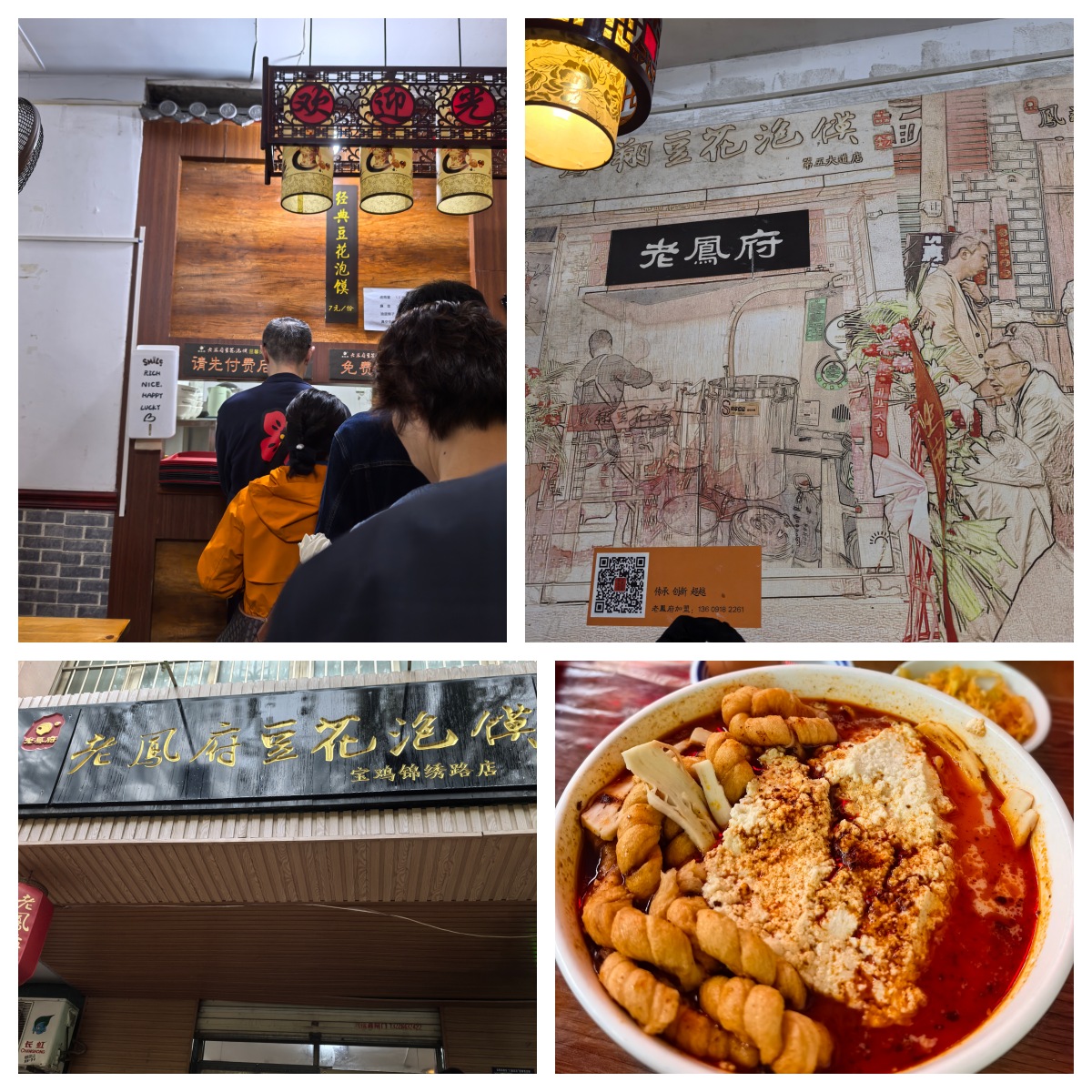
Baoji mornings begin with a bowl of doufu pao mo(豆花泡馍tofu pudding soaked flatbread). The bread is shaved into thin slices, soaked in soybean milk and tofu pudding, topped with mini twisted crisps, and drizzled with chili oil—a beloved breakfast for locals. Sitting in a roadside eatery, watching the city awaken in the morning light while savoring this simple yet comforting dish, I felt an inexplicable connection to Baoji.
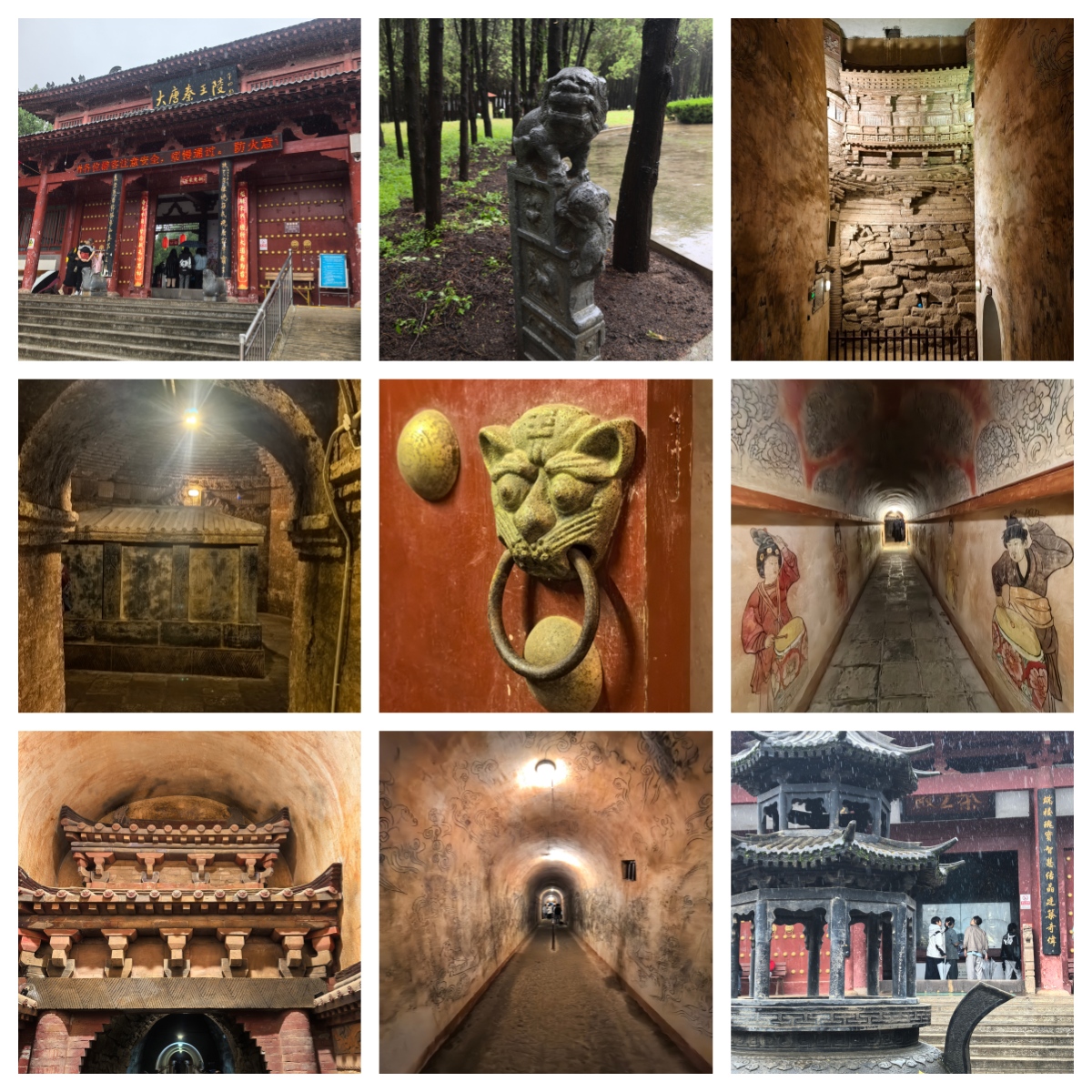
In the morning, I visited the Tang Dynasty King’s Tomb of Qin Wang Li Maozhen(大唐秦王陵), the joint burial site of Li Maozhen, the Tang-era King of Qin, and his wife. Descending into the underground palace felt like stepping into a forgotten world. The tomb passages were lined with 18 vividly painted murals of musicians, while precious Tang Dynasty artifacts—such as Hu-style (Central Asian) musicians’ figurines and tri-colored pottery horses—showcased the craftsmanship of ancient artisans. Most breathtaking were the "celestial star maps" on the ground, where bricks were removed in the pattern of the Big Dipper, reflecting the ancients’ awe of the cosmos and their longing for eternity.
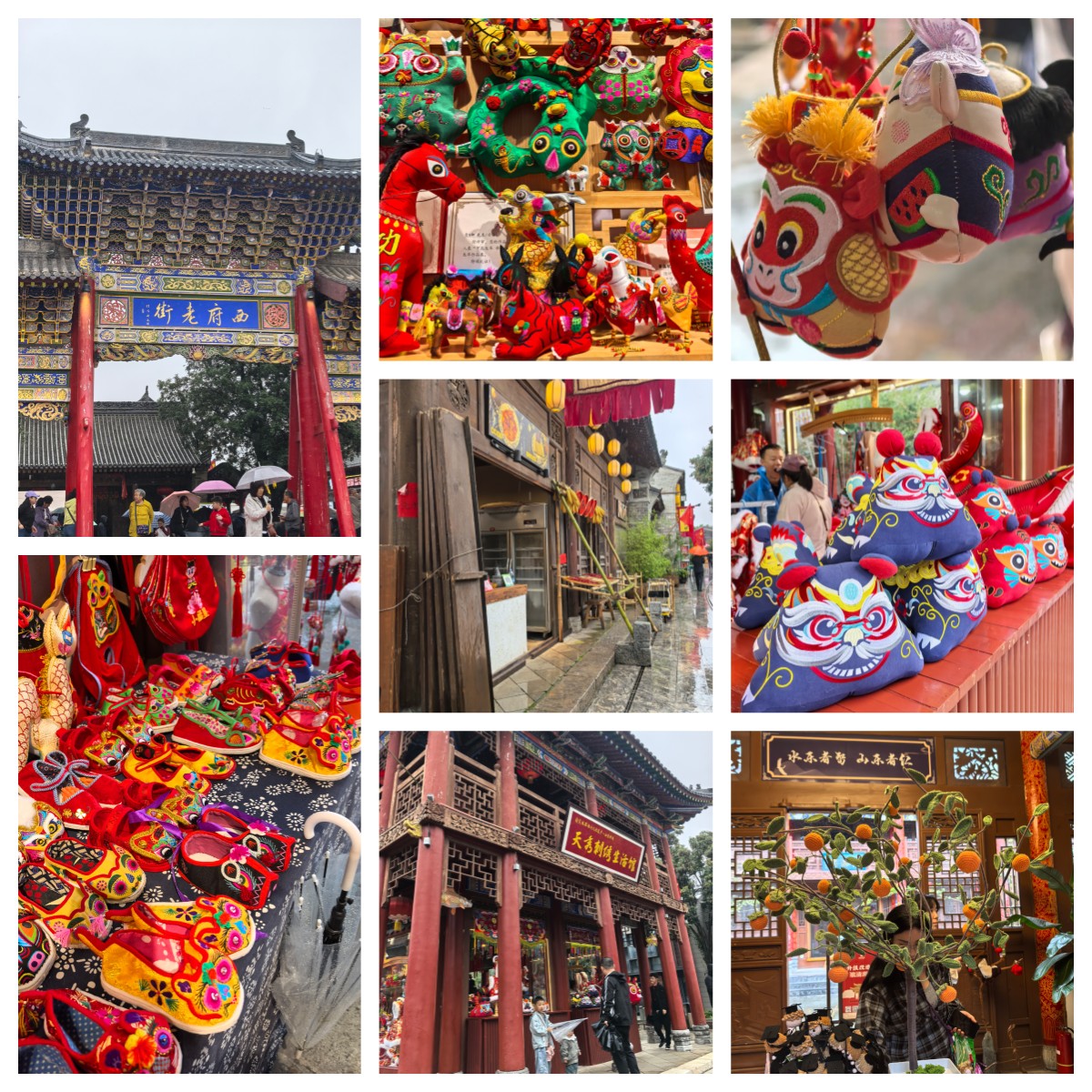
On my final day, I explored Xifu Old Street(西府老街), divided into an "Old District" and a "Guild Hall Area." The Old District centers around Baoji’s rich culinary culture, with workshops recreating traditional crafts and snack streets offering a variety of West-Fu specialties.
Here, you can taste authentic youbing jiacai(油饼夹菜oil-stuffed flatbread with pickled vegetables), handmade mianpi(手工擀面皮cold noodles), and watch artisans create intangible cultural heritage items like embroidery and cloth tigers. The Guild Hall Area, anchored by the former residence of Dang Chongya and a wooden spoon mask museum, serves as a hub for historical and cultural preservation.
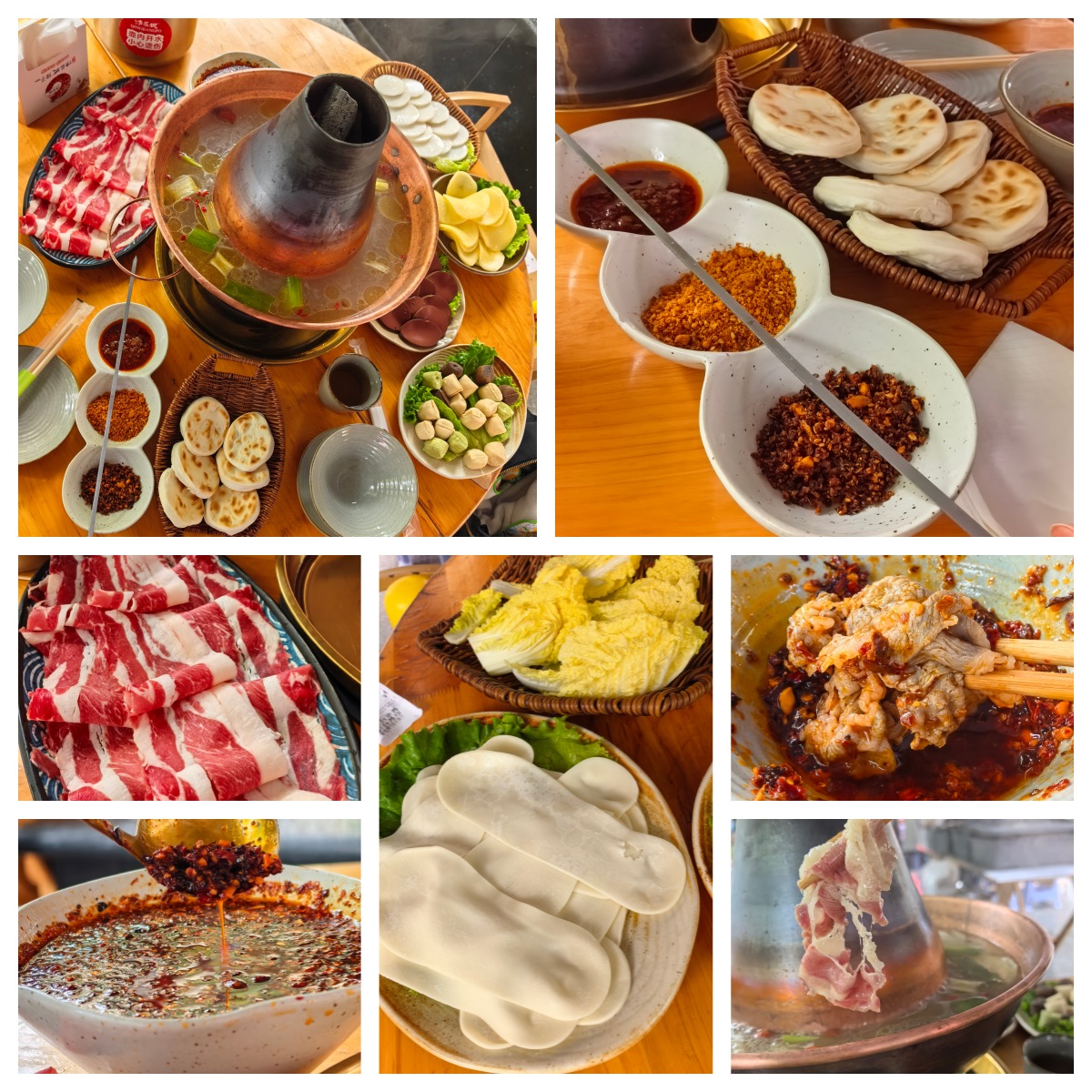
My farewell lunch was a fiery Qingjiangpo chili oil hotpot(清江坡油泼辣子火锅). Scalding hot oil poured over a carefully prepared chili paste unleashed an irresistible aroma—a scent that might remain my deepest memory of Baoji.
· Transportation: High-speed rail from Zhengzhou to Baoji takes just 2.5–3 hours. Most attractions in Baoji are centrally located, walkable, or easily accessible by taxi.
· Accommodation: Stay near Baoji Railway Station for convenience and a lively local atmosphere, or opt for hotels in the High-Tech District for modern amenities and easy transit.
This four-day journey through Baoji felt like a dream spanning three millennia—from the solemn majesty of bronze artifacts to the grandeur of Tang Dynasty tombs, and the bold, spicy flavors of West-Fu cuisine. This city doesn’t rush to impress; it simply waits, quietly, for those willing to uncover its timeless beauty.
Yours Truly
Ann Lyu - Charmission Travel








Never miss an update from us. Sign up for our newsletter and stay informed about our latest news, products, and promotions.
2014-2024 © Copyright Charmission, All rights reserved.京ICP备19015279号-2